
SpaceX and Tesla Explore a Merger: Why Space Companies Are Becoming Technology Platforms
- October 21, 2026
- Posted by: admin
- Category: Uncategorized
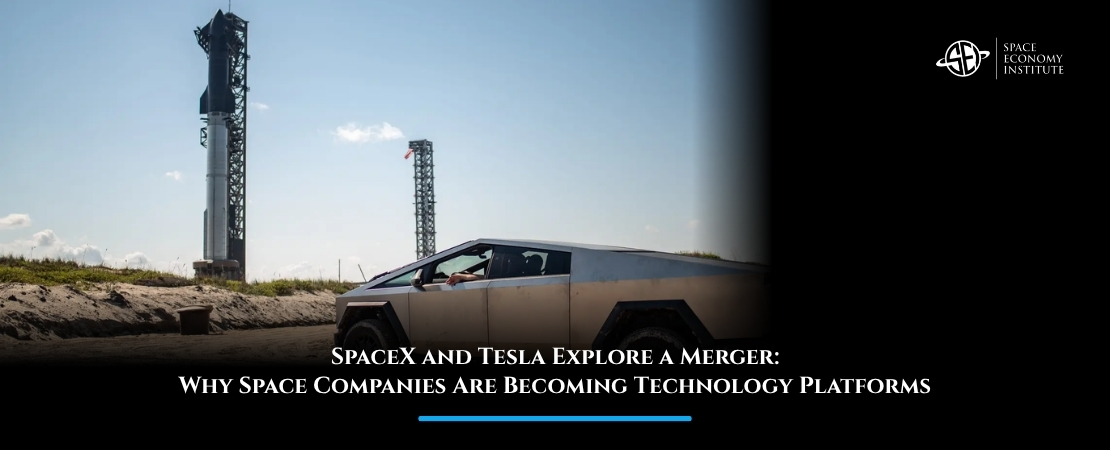
SpaceX and Tesla are formally exploring a combination that could create one of the largest corporate mergers ever attempted.
On October 20, Elon Musk confirmed that both companies have created independent special committees to evaluate a potential deal. No terms have been agreed and a merger remains uncertain, but investors reacted immediately: SpaceX shares jumped more than 8% following the announcement.
Beyond the extraordinary valuation involved, the discussion reveals something important about the modern space economy: the boundaries between space, artificial intelligence, energy, telecommunications and robotics are becoming increasingly difficult to separate.
The Strategic Logic Goes Beyond Rockets and Cars
At first sight, combining a rocket manufacturer with an electric vehicle company may seem unusual.
But SpaceX and Tesla are no longer defined only by their original products.
SpaceX operates launch vehicles and Starlink satellites, while increasingly investing in artificial intelligence and large-scale computing infrastructure. Tesla combines electric vehicles with battery storage, AI, autonomous driving and robotics.
The two businesses are already connected financially and operationally. Tesla disclosed that SpaceX purchased hundreds of millions of dollars of Megapack energy-storage products during the first half of 2026. Tesla also invested $2 billion in SpaceX earlier this year.
They are also jointly developing Terafab, an advanced semiconductor manufacturing project intended to support their growing demand for AI computing and autonomous systems.
The economic logic is therefore less about combining “cars and rockets” and more about bringing together several technologies that increasingly depend on the same underlying infrastructure.
Why Vertical Integration Matters
One of the most important concepts behind companies such as SpaceX is vertical integration.
Instead of buying most critical technologies from external suppliers, a vertically integrated company controls several stages of its own value chain.
SpaceX already follows this model extensively. It develops rockets, engines, satellites, software, ground systems and communications services internally. This allows the company to coordinate technologies closely, reduce dependence on suppliers and potentially lower costs.
A closer integration with Tesla could extend this model into additional areas.
Energy storage systems could support launch sites, data centers and satellite infrastructure. AI technologies developed for autonomous vehicles and robots could potentially support spacecraft, manufacturing systems or future off-Earth operations. Semiconductor production could serve computing needs across both companies.
The attraction is clear: one technological platform can serve several markets at once.
From Space Company to Infrastructure Company
This shift matters because SpaceX increasingly generates value from services that extend beyond launch.
Starlink transformed the company from a rocket provider into a global telecommunications operator. More recently, AI-related activities have become a major contributor to SpaceX’s business, while the company is investing heavily in computing infrastructure. Reuters reported that AI represented more than half of SpaceX’s latest quarterly revenue.
This suggests a broader evolution in the space industry.
The largest future space companies may not earn most of their money from selling rockets or satellites individually. Instead, they may own integrated infrastructure platforms combining transportation, communications, computing, energy and data.
The same principle can already be seen elsewhere in the industry. Satellite operators increasingly sell analytics rather than imagery. Launch companies develop satellite services. Telecom operators invest in constellations. Defence companies acquire space businesses.
Space is becoming a layer inside much larger technology ecosystems.
Scale Creates Opportunities—and Risks
Integration also creates significant risks.
A combined SpaceX–Tesla group would be enormously complex and capital-intensive. SpaceX alone is investing tens of billions of dollars in new infrastructure, while both companies are simultaneously pursuing expensive programmes in AI, manufacturing and advanced hardware.
Corporate governance is another challenge. Musk is CEO and a major shareholder of both companies, which is why he is excluded from the special committees assessing the potential transaction. Any deal would also require shareholder approval and face regulatory scrutiny.
There are strategic concerns too. SpaceX is a major U.S. government and defence contractor, while Tesla operates extensively in China. Combining the two could create new questions around technology access, national security and corporate oversight.
The efficiencies of scale therefore have to be balanced against greater concentration and complexity.
The Space Economy Is Converging With the Wider Technology Economy
Whether the merger ultimately happens is less important than what the discussion already tells us.
Space is no longer developing as an isolated aerospace industry. Satellites require AI and semiconductors. Orbital computing requires enormous amounts of energy. Autonomous systems need robotics and connectivity. Launch infrastructure increasingly supports businesses that extend far beyond launch itself.
The potential SpaceX–Tesla combination is an unusually large example of that convergence.
For investors, entrepreneurs and policymakers, understanding the space economy increasingly means understanding how space infrastructure connects with technology markets on Earth.
If this topic interests you, the Master in Space Economy by the Space Economy Institute explores space finance, corporate strategy, emerging business models, technology and investment across the global space sector. Discover more about the Master and how the boundaries of the space economy are rapidly expanding.