
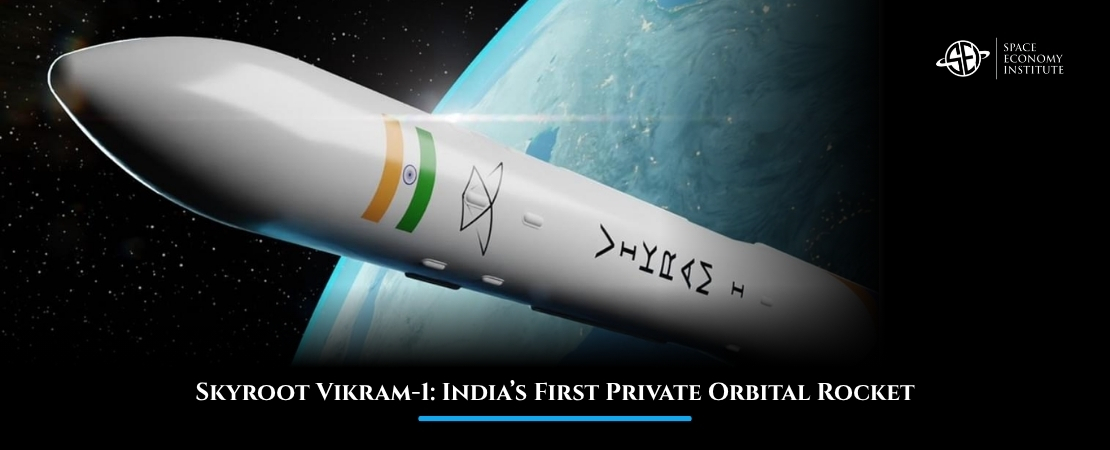
Skyroot Vikram-1: India’s First Private Orbital Rocket
- July 6, 2026
- Posted by: admin
- Category: International
India’s Private Space Moment Arrives
India is approaching a historic milestone in commercial space. Skyroot Aerospace is preparing to launch Vikram-1, the country’s first privately developed orbital rocket, during a window opening on July 12, 2026. The mission, named Aagaman, is more than a technical test. It is a signal that India’s private space sector is moving from policy ambition to operational capability.
From ISRO-Led Success to Private Launch Competition
India has long been respected for efficient, technically sophisticated space missions led by the Indian Space Research Organisation, or ISRO. From lunar exploration to Mars orbit and cost-effective satellite launches, India has built a strong reputation in global space.
But the next phase is different. The government wants private companies to take on more commercial activity, allowing ISRO to focus on advanced science, exploration, strategic missions, and technology development. That shift mirrors a broader global trend: public space agencies increasingly act as enablers, regulators, and anchor customers, while private companies build scalable services.
Skyroot Aerospace is one of the clearest examples of this transition. Founded by former ISRO engineers, the Hyderabad-based startup has moved quickly from suborbital testing to orbital launch readiness. Its Vikram-S rocket made history in 2022 as India’s first privately developed rocket to fly. Vikram-1 is the next, much larger step: reaching orbit.
Why Vikram-1 Matters
Vikram-1 is designed for the small satellite market, one of the most dynamic segments of the space economy. The rocket is a multi-stage launch vehicle, roughly seven stories tall, capable of carrying payloads of up to 350 kilograms into low Earth orbit.
This positions Skyroot in a market served globally by companies such as Rocket Lab, Firefly Aerospace, and other small-launch providers. The value proposition is flexibility. Small satellite operators do not always want to wait for rideshare missions on large rockets, where they may have limited control over timing, orbital destination, or deployment conditions.
A dedicated small launch vehicle can offer more customized access to orbit. That is attractive for Earth observation startups, defense users, research institutions, communications payloads, and technology-demonstration missions.
For India, this matters strategically. If Vikram-1 succeeds, the country will not only have a new rocket. It will have evidence that private Indian firms can build, test, and operate orbital launch systems from domestic infrastructure.
Investment, Industrial Scale, and India’s $44 Billion Goal
The timing is especially important because capital is flowing into India’s space sector. Skyroot recently raised $60 million from investors including GIC and Sherpalo Ventures, becoming India’s first space-tech startup to reach a valuation of about $1 billion.
That valuation is not just a startup milestone. It reflects investor belief that India can become a serious player in launch, satellite manufacturing, space services, and downstream applications.
The Indian government has set an ambitious target: building a $44 billion space economy by 2033. To reach that goal, India needs more than national missions. It needs commercial launch providers, satellite builders, component suppliers, data companies, insurance, financing, export capacity, and international customers.
Vikram-1 can therefore be seen as a gateway mission. It tests propulsion, guidance, stage separation, launch operations, and private-sector coordination with India’s national spaceport. But it also tests market confidence.
The Global Launch Market Is Changing
The global launch market is becoming more segmented. Heavy-lift rockets support megaconstellations and large missions. Medium launch vehicles serve institutional and commercial payloads. Small launchers aim to provide rapid, tailored access to orbit.
This creates room for regional launch providers, especially in countries seeking sovereign access to space. India has cost advantages, engineering depth, and a strong institutional space heritage. If private companies can combine those strengths with reliable commercial execution, India could become a competitive launch hub for Asian, Middle Eastern, African, and global small-satellite customers.
Conclusion
Skyroot’s Vikram-1 is more than India’s first private orbital rocket. It is a test of whether India can convert decades of space expertise into a globally competitive private space industry. If successful, Mission Aagaman could become a defining moment for launch entrepreneurship, industrial policy, and the future of India’s space economy.
If this topic is of interest, you can learn more about private launch markets, space investment, and emerging space economies in the Master in Space Economy by the Space Economy Institute. Discover more about the Master and explore how new launch companies are changing access to orbit.