
Direct-to-Device Satellite Connectivity: Why Phones Are Becoming the Next Space Economy Market
- June 30, 2026
- Posted by: admin
- Category: Innovation
The Next Internet Layer May Be in Orbit
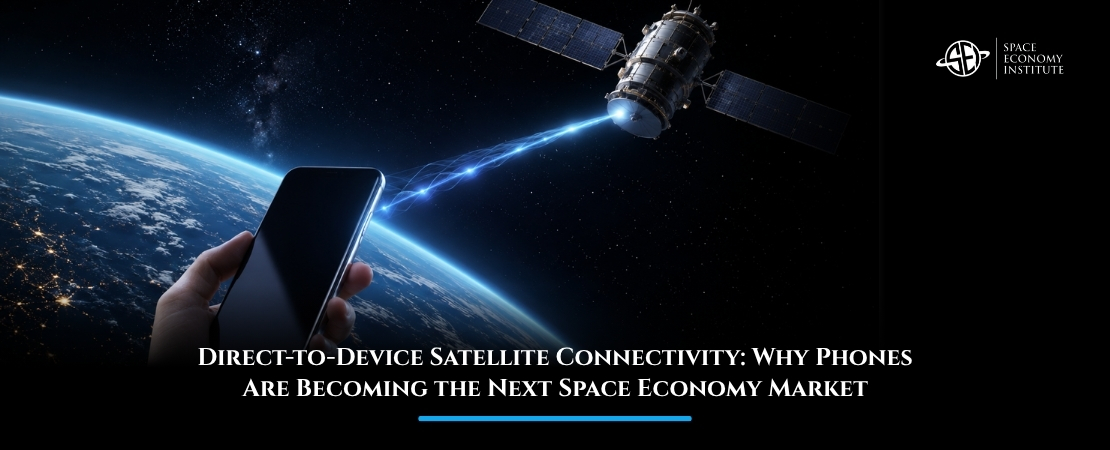
The race to connect ordinary smartphones directly to satellites is becoming one of the hottest markets in the space economy. On June 30, 2026, Japan moved to support Rakuten’s satellite communications project with a major government grant, reinforcing a global trend: nations and telecom operators want satellite-to-phone networks that can provide coverage where cell towers fail, from remote regions to disaster zones.
From Satellite Broadband to Satellite Phones for Everyone
Traditional satellite phones have existed for decades, but they required specialized handsets, expensive subscriptions, and niche use cases. Direct-to-device satellite connectivity changes the model. Instead of buying a dedicated satellite phone, users could connect ordinary smartphones directly to satellites when terrestrial networks are unavailable.
This is a major commercial shift. The addressable market is no longer limited to maritime operators, remote workers, defense users, or emergency responders. It potentially includes billions of mobile subscribers.
The first use cases are simple but powerful: emergency messaging, disaster recovery, rural coverage, maritime connectivity, and basic communications in areas without terrestrial infrastructure. Over time, the market is expected to move toward voice, data, Internet of Things connectivity, and eventually deeper integration with 5G and 6G non-terrestrial networks.
Japan’s Rakuten Move Signals Strategic Demand
Japan’s reported plan to provide up to $912 million to Rakuten’s satellite communications project is not just a telecom subsidy. It is a space economy signal. Rakuten is negotiating a joint venture with AST SpaceMobile, one of the leading companies developing direct-to-device satellite broadband for ordinary smartphones.
For Japan, the logic is clear. The country is highly exposed to earthquakes, typhoons, remote island connectivity challenges, and emergency communications needs. Satellite-to-phone systems can add resilience when terrestrial networks are damaged or unavailable.
The project also reflects economic security concerns. Governments increasingly see satellite communications as strategic infrastructure, not merely a consumer service. Depending entirely on foreign systems, including Starlink, may be convenient in the short term, but it can create long-term dependency. Domestic or allied satellite networks offer more control over data, security, availability, and crisis response.
A Crowded but Fast-Growing Market
The direct-to-device market is attracting several major players. SpaceX is developing Starlink Direct to Cell with telecom partners. AST SpaceMobile is building large BlueBird satellites designed to connect directly with standard mobile phones. Apple has invested in satellite-enabled emergency communications through Globalstar, while telecom groups such as Orange, Vodafone, AT&T, Verizon, and Rakuten are exploring partnerships to extend coverage beyond terrestrial networks.
The business model is still evolving. Some services may be bundled into premium mobile plans. Others may be sold as emergency connectivity, enterprise resilience, aviation and maritime backup, or government communications capacity. The winners will likely be those that combine satellite infrastructure, spectrum access, telecom partnerships, regulatory approvals, and device compatibility.
This is why spectrum is becoming so valuable. Satellite-to-phone services depend on access to frequencies that can connect reliably with small antennas inside ordinary smartphones. Companies with licensed spectrum, telecom relationships, and operational satellite capacity are becoming strategic assets.
From Connectivity to Space-Terrestrial Networks
The longer-term opportunity is bigger than emergency texting. Direct-to-device connectivity is part of the convergence between terrestrial telecom networks and space infrastructure. In the 6G era, satellites may become a standard layer of global communications, supporting autonomous vehicles, connected logistics, remote health services, defense networks, and critical infrastructure monitoring.
This transition will create demand across the space economy: satellite manufacturing, launch services, phased-array antennas, onboard processing, ground gateways, cybersecurity, network software, and space traffic coordination.
It also raises policy questions. Who controls the data? Which networks are trusted in emergencies? How should spectrum be shared between terrestrial and satellite operators? How can orbital congestion be managed as more satellites are deployed?
Conclusion
Direct-to-device satellite connectivity is turning the smartphone into a space-enabled device. Japan’s support for Rakuten’s satellite project shows that this market is no longer experimental; it is becoming strategic infrastructure for resilience, sovereignty, and digital inclusion.
If this topic is of interest, you can learn more about satellite communications, direct-to-device networks, telecom-space convergence, and space investment in the Master in Space Economy by the Space Economy Institute. Discover more about the Master and explore how satellite connectivity is shaping the next phase of the global space economy.