
Orbital Data Centers: The Next Frontier of the Space Economy
- June 11, 2026
- Posted by: admin
- Category: Economics
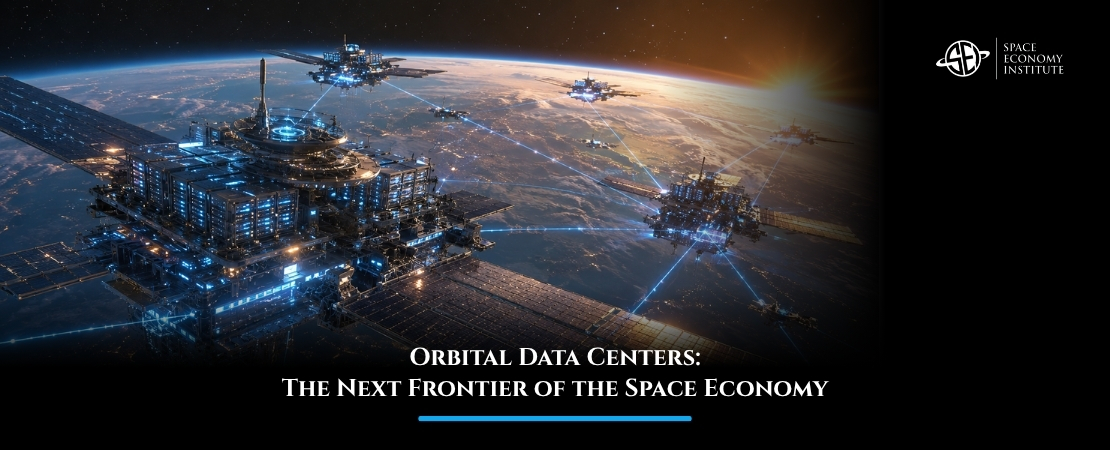
In 2026, the global space economy is valued at approximately $626 billion and continues its robust expansion toward the $1 trillion mark. A bold new chapter is unfolding: the deployment of orbital data centers to power artificial intelligence (AI) at unprecedented scale. Led by ambitious plans from SpaceX, which has filed for up to one million satellites dedicated to orbital computing, this concept addresses Earth’s mounting constraints on energy, land, and cooling for AI infrastructure.
Why Orbital Data Centers Matter Now
Terrestrial data centers face explosive demand from AI training and inference. Global electricity consumption for data centers is projected to more than double by 2035, potentially reaching 1,200–1,700 TWh. Building sufficient power plants, securing water for cooling, and navigating regulatory hurdles on Earth are becoming prohibitively challenging. Space offers near-limitless solar power and passive radiative cooling in the vacuum, potentially slashing environmental footprints while enabling massive compute clusters.
SpaceX’s AI1 satellite design exemplifies this shift, delivering around 150 kW of compute power per unit—equivalent to a high-end terrestrial NVIDIA rack—powered by expansive solar arrays. With Starship’s reusable architecture driving down launch costs, the economics could favor orbit for terawatt-scale AI within years. Partnerships, such as discussions with Google and ties to xAI, signal accelerating momentum.
Technical and Economic Opportunities
Energy and Sustainability Advantages
Satellites in suitable orbits enjoy continuous or near-continuous sunlight, avoiding terrestrial grid dependencies. Radiative cooling eliminates water-intensive systems that consume billions of gallons annually on Earth. Proponents argue that deploying a million tonnes of satellite mass yearly could yield 100 GW of AI compute with lower long-term costs.
In-Space Infrastructure Synergies
This builds on existing mega-constellations like Starlink. Optical inter-satellite links would enable low-latency data transfer, while collision avoidance systems and end-of-life disposal strategies (including potential recycling) aim to mitigate space debris risks.
Broader Ecosystem Impact
Orbital data centers could catalyze in-space manufacturing, servicing, and logistics. Companies like Astroscale are advancing refueling technologies, supporting a maturing “space-to-space” economy. Investment is rebounding, with SpaceX’s anticipated IPO adding liquidity and validation to the sector.
Challenges remain significant. Radiation hardening for chips, latency for Earth-bound applications, high upfront capital, and regulatory scrutiny (FCC filings, international coordination) pose hurdles. Skeptics note that current orbital compute may cost more per watt than ground-based alternatives, though rapid Starship progress could close the gap.
Strategic Implications for the Space Economy
This development accelerates the transition from Earth-centric space activities to a true orbital economy. Governments and private players are investing in dual-use capabilities—defense, broadband, and now AI infrastructure—driving innovation in launch, power systems, and autonomy. Emerging players in Europe, China (e.g., Qianfan), and elsewhere are watching closely, potentially fostering new geopolitical dynamics in orbital real estate.
Conclusion
Orbital data centers represent more than a technological gimmick; they embody the space economy’s maturation into a critical enabler of terrestrial progress. By harnessing solar abundance and overcoming planetary limits, they could unlock sustainable AI growth, lower barriers to innovation, and pave the way for multiplanetary infrastructure. As deployments begin in earnest—potentially with pilot missions later this decade—the implications ripple across economies, environments, and humanity’s future in space. Stakeholders from policymakers to investors must engage now to shape equitable, sustainable access to this new frontier.