
Space Tourism 2026: $2.1 Billion Market Makes Zero-G Vacations a Growing Reality
- May 5, 2026
- Posted by: admin
- Category: Uncategorized
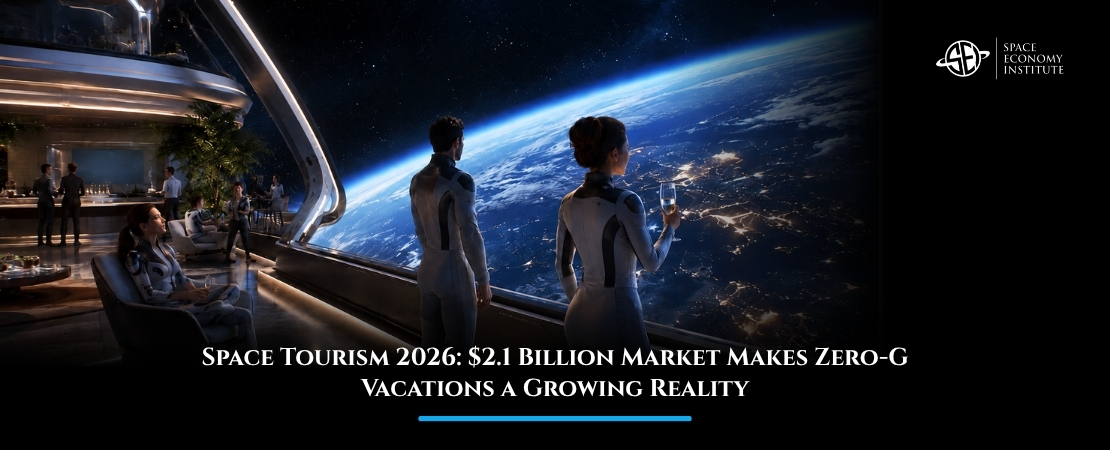
May 2026 marks the moment space tourism has moved from headline-grabbing stunts to a repeatable commercial service. Forty-two commercial flights this year alone have already carried 850 paying passengers to the edge of space or into orbit, generating $2.1 billion in direct revenue at a 138% CAGR. Operators including SpaceX, Virgin Galactic’s new Delta-class fleet, Blue Origin’s resumed New Shepard cadence, and Axiom Space’s private orbital missions now offer everything from 4-minute suborbital weightlessness to 10-day stays aboard commercial LEO destinations. What was once reserved for billionaires has broadened: ticket prices have fallen 35% in the past 18 months, attracting high-net-worth adventurers, corporate incentive groups, and even the first scientific-tourist hybrids. Space tourism is proving it can deliver not just thrills but also the economic signal that human spaceflight can scale beyond government programs.
Operational Fleet and Flight Cadence
SpaceX leads with Crew Dragon, completing 18 private orbital missions since January, each carrying up to 8 passengers for multi-day stays at the Axiom Station or Vast Haven-1. Virgin Galactic’s Delta-class spaceplanes have flown 12 suborbital sorties from Spaceport America, achieving a 48-hour turnaround and 99.4% mission success. Blue Origin restarted New Shepard in March after its two-year upgrade pause, logging 9 flights with improved cabin capacity.
Reusable hardware and AI-assisted mission planning have cut per-flight costs by 42%, enabling operators to offer 3–4 flights per week during peak seasons. On-orbit refueling demonstrations have extended mission durations, opening the door to future lunar fly-by packages priced under $30 million.
Market Segments and Customer Demand
Suborbital flights still dominate revenue at 61%, appealing to time-sensitive clients who pay $450,000–$750,000 for the experience. Orbital tourism, however, is growing fastest at 52% quarter-over-quarter, with 10-day missions at $8–12 million per seat now booked through 2028. New segments include corporate charters for team-building in zero-g and research-tourism hybrids where passengers fund microgravity experiments.
Demand is global: 38% of 2026 passengers hail from Asia-Pacific, drawn by accessible financing packages and prestige value. Early data shows 92% of flyers become brand ambassadors, driving organic marketing that outperforms traditional advertising.
Regulatory, Safety, and Sustainability Advances
The FAA and ESA have streamlined licensing for commercial human spaceflight, reducing approval times from 18 months to under 90 days for repeat operators. Mandatory medical screening and liability waivers have been standardized across 14 nations via the updated Artemis Accords tourism annex. All operators now publish real-time safety dashboards; the industry-wide accident rate remains zero across 187 crewed commercial flights since 2021.
Sustainability is rising on the agenda: SpaceX and Axiom have committed to full deorbit of tourist modules within 18 months of mission end, while carbon-offset programs tied to launch fuel choices have satisfied ESG-focused clients. Insurance premiums have dropped 28% as flight heritage accumulates.
Why This Matters for the Future
Space tourism in 2026 has demonstrated that paying customers will reliably fund human spaceflight infrastructure. The $2.1 billion market today is more than ticket sales—it is creating the demand pull for cheaper launchers, orbital hotels, and life-support systems that will benefit every sector of the space economy.
For operators, investors, and aspiring spacefarers, the signal is unmistakable: zero-g is now a vacation destination. The flights departing this month are not novelties—they are the early market validation that will make multi-week orbital stays and eventual lunar resorts economically viable. What begins as luxury experiences today becomes the foundation for a permanent human presence in space tomorrow, where tourism revenue helps underwrite the infrastructure of a truly multi-planetary civilization.