
Master in Space Economy
Develop the strategic, managerial and entrepreneurial skills to lead in one of the world’s fastest-growing industries.
An international program designed for professionals, executives, entrepreneurs and graduates who want to understand, manage and build opportunities across the space economy — from satellites and Earth observation to space law, finance, entrepreneurship and downstream applications.
Duration
12 Months
Language
English
Learning Mode
Online
Lead the final frontier of business with a Master from the industry’s premier authority
The Master in Space Economy by the Space Economy Institute is an exclusive program designed for those ready to command the next economic era. This curriculum goes beyond traditional theory, equipping you with the strategic foresight and specialized competencies required to identify, navigate, and monetize the burgeoning opportunities within the space sector.
Engineered for both high-potential newcomers and seasoned executives, our distance-learning model provides the flexibility to schedule study patterns and tasks tailored to participants’ lifestyle.
on average
shaping future together
among participants on average
Why Space Economy Institute?
The Space Economy Institute is an international knowledge hub dedicated to education, research, networking and innovation in the space economy.
Our mission is to help individuals, companies and institutions understand the opportunities created by the space sector and develop the skills needed to participate in its growth.
By combining multidisciplinary education, international faculty, practical projects and a global perspective, the Institute supports the development of human capital for one of the most strategic industries of the future.
- Connect with an international student and alumni community bringing together top-tier talent and entrepreneurs from 37 distinct nationalities across 4 continents.
- Learn from seasoned industry experts, including CEOs and Senior Vice Presidents, with professional backgrounds in global institutons such as European Space Agency, NASA, and EUMETSAT.
- Enjoy a flexible learning approach combining live-streamed lectures, digital learning units, collaborative activities, and on-demand content to support continuous learning.
- Tackle a real company challenge or create a business plan with the support of expert mentors.
Hear from our alumni
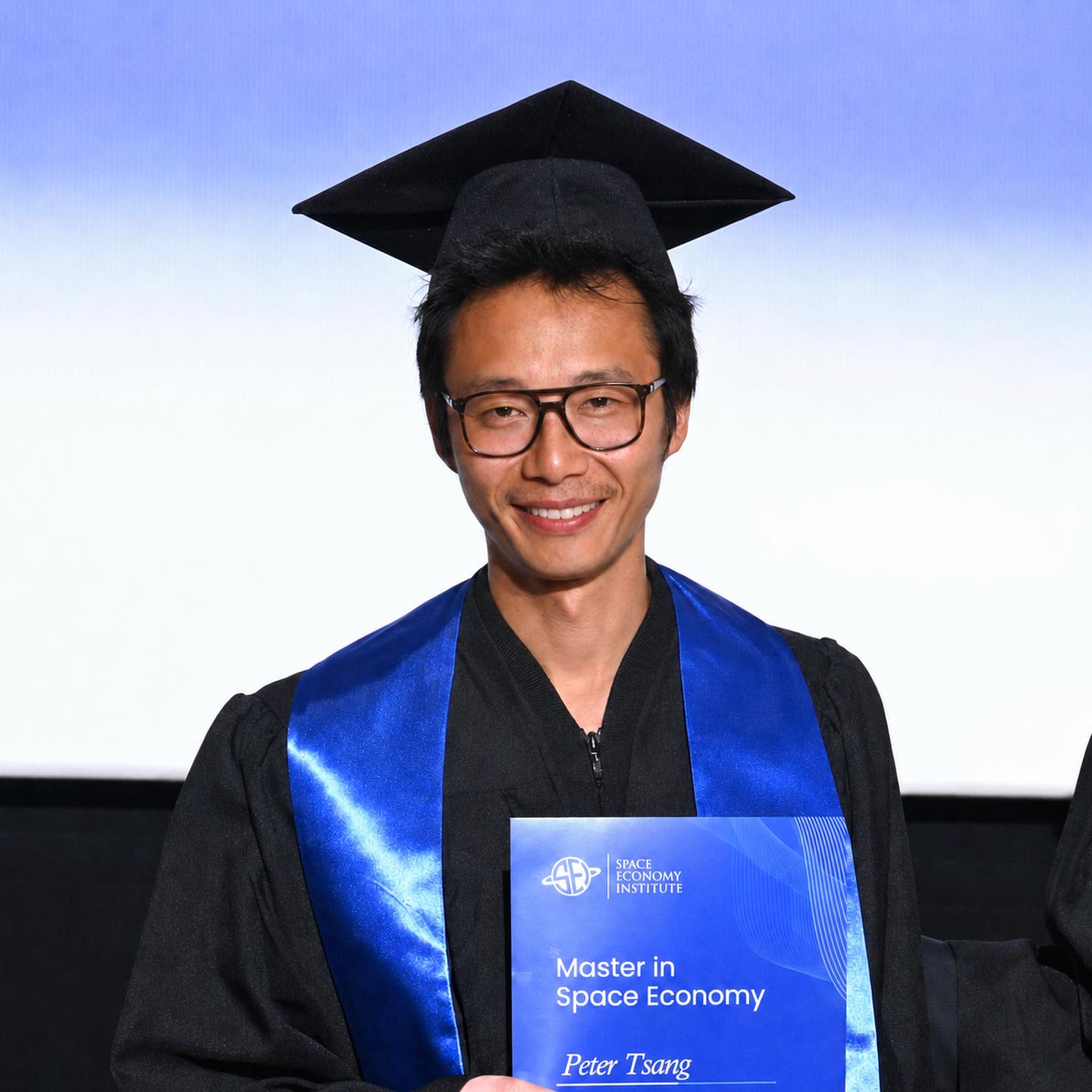
A comprehensive and cutting edge educational opportunity designed to equip participants with the skillsand knowledge to thrive in the rapidly growing space economy. This Masters Program is perfect for anyone looking into transition into the space economy and structured to accommodate professionals with busy schedules. It combines technical knowledge with viable business models and strategies for spacefocused initiatives ensuring a well rounded education that aligns with the needs of investment professionals.
Peter Tsang Wai San - Investment Director at InnovateX Capital
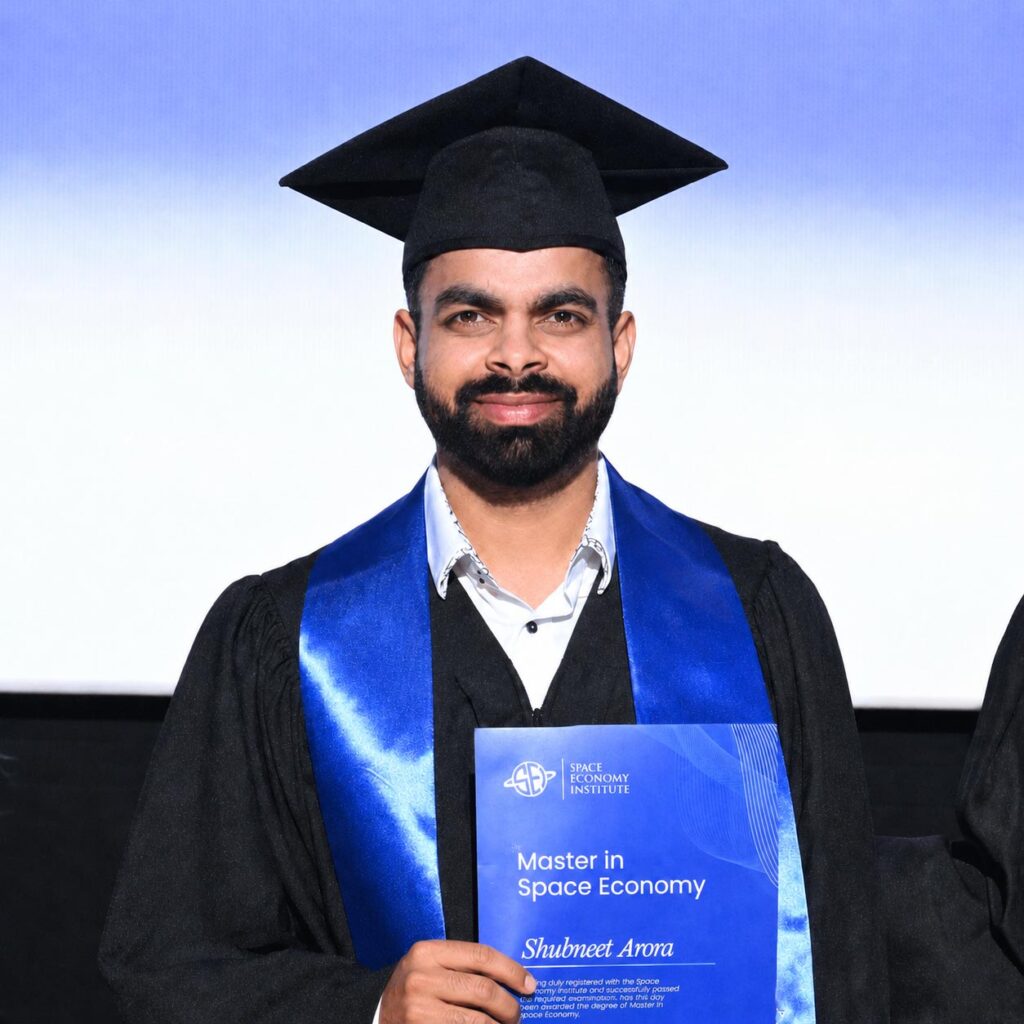
The Space Economy Master program has been transformative - it has deepened my understanding of how strategic finance and innovative technology can converge to create sustainable, high-impact solutions in the rapidly evolving space industry. My capstone project critically examined innovative business models for Earth Observation services. By integrating cross-sector strategies, I aim to unlock new pathways for capital efficiency and operational resilience, ultimately contributing to a more robust and sustainable space economy.
Shubneet Sanjay Arora - Banking Advisor at The Royal Bank of Canada
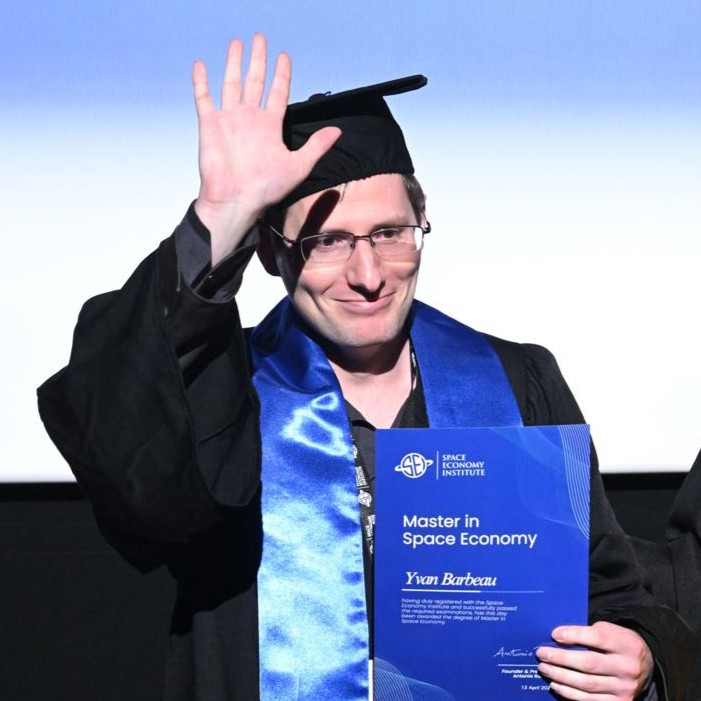
My capstone project for the Master in Space Economy at the Space Economy Institute focused on space insurance within the space sector, as it is closely tied to the industry's evolution and the concept of risk. Without risk, there is no progress, no evolution — and therefore, no success. I aspire to be part of the future of the space economy because I firmly believe that humanity is destined to become a multiplanetary species.
Yvan Barbeau - Data Specialist at Outlier
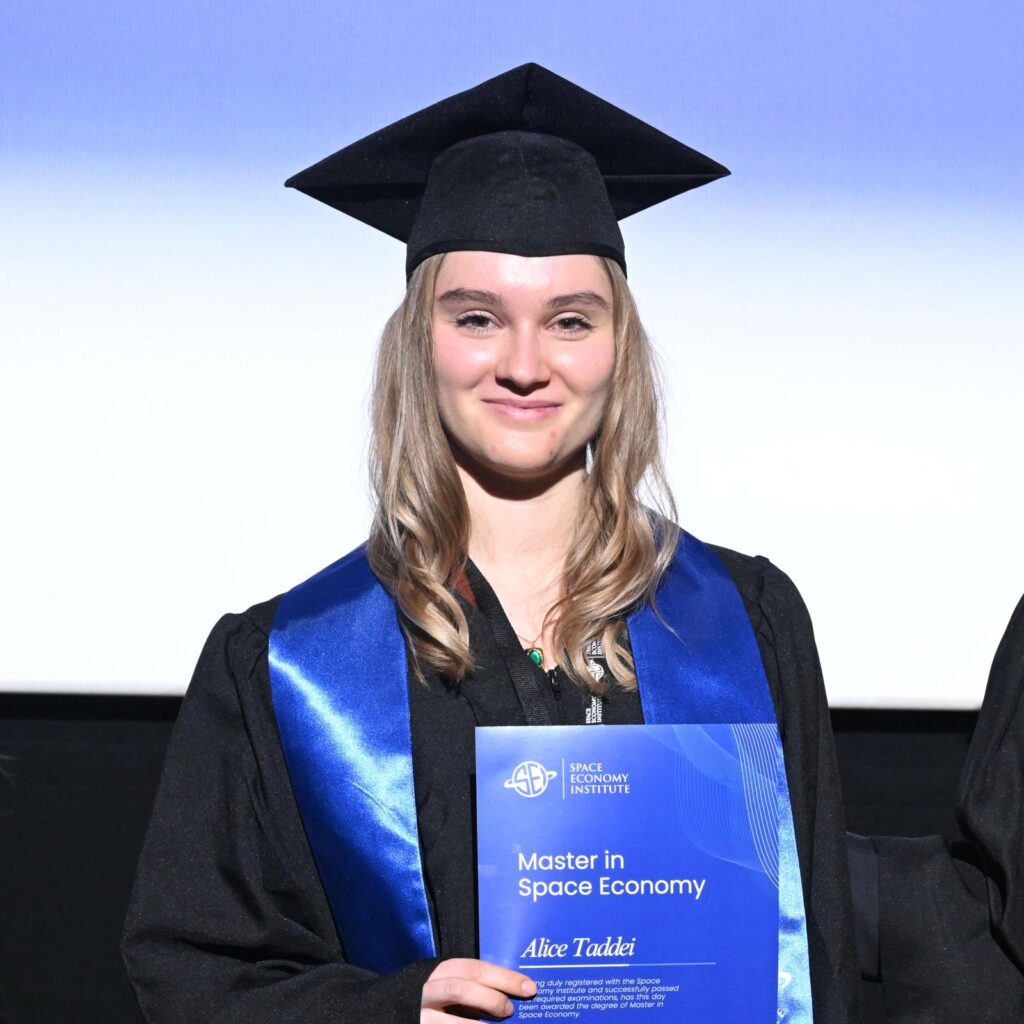
The Master in Space Economy taught me that space isn't just about going further: it's about looking closer. It's a perspective that helps solve real-world challenges and inspires innovation here on Earth. For my capstone project, I focused on something close to both tradition and innovation: helping small producers of wine, olive oil, and truffle in Umbria embrace precision agriculture. By using satellite data and other technologies in a smart, accessible way, the goal was to support these artisans of the land in cultivating more sustainably while preserving quality, heritage, and the beauty of their craft for future generations.
Alice Taddei - Space Economy Institute Alumni
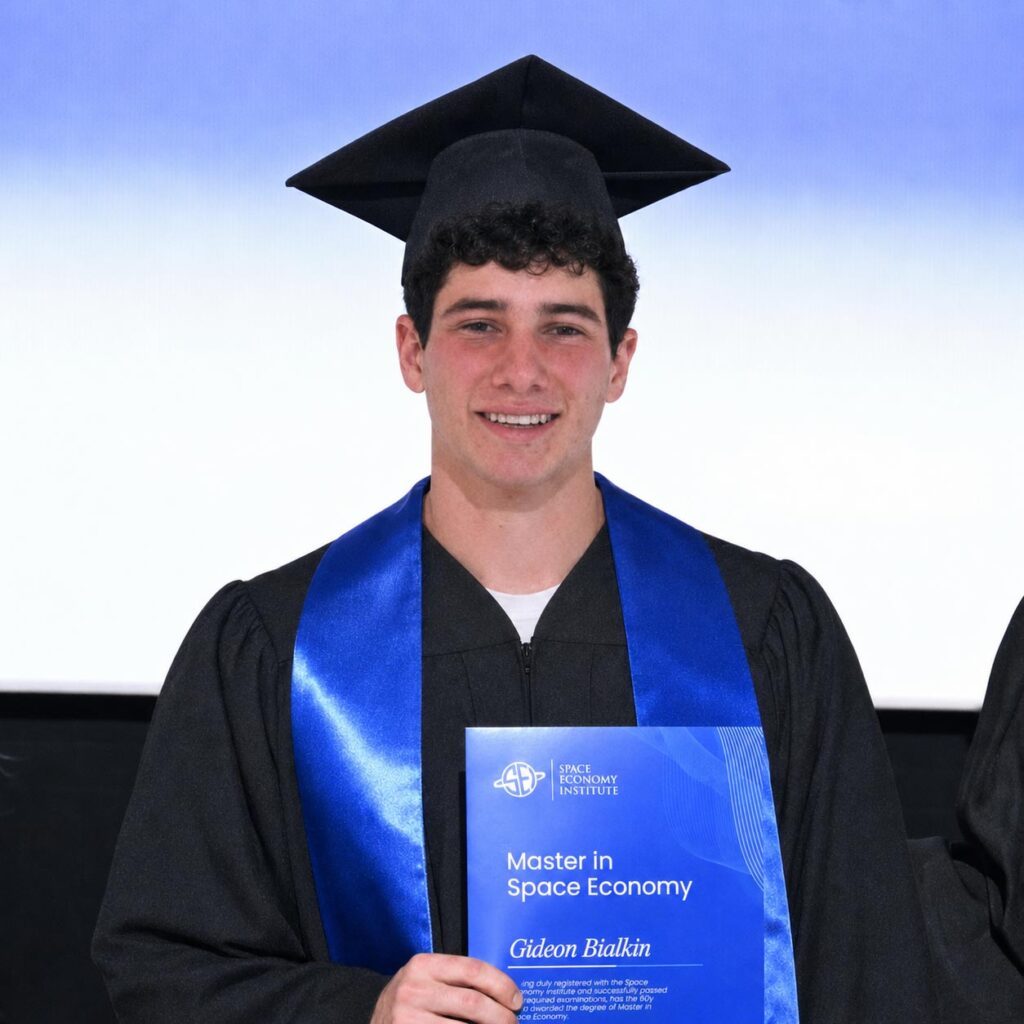
The Master in Space Economy at Space Economy Institute has been a driver of my societal impact, leading to my internship with Farmonauts at first and currently at SpaceX. It has provoked me to think big picture about the utilization of space. My time with SEI has truly been invaluable and I am deeply grateful for all that you have done.
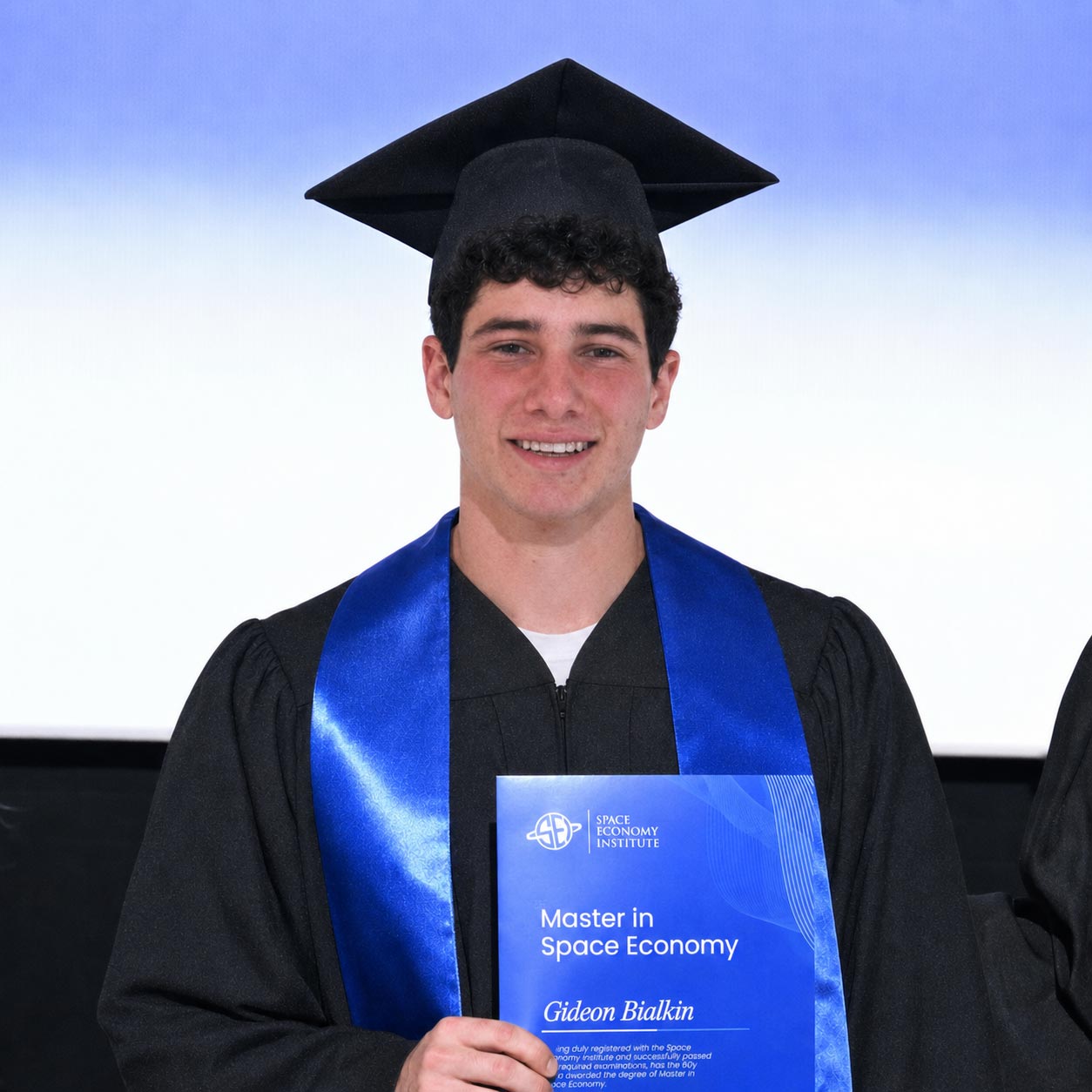
Gideon Bialkin - SpaceX Intern
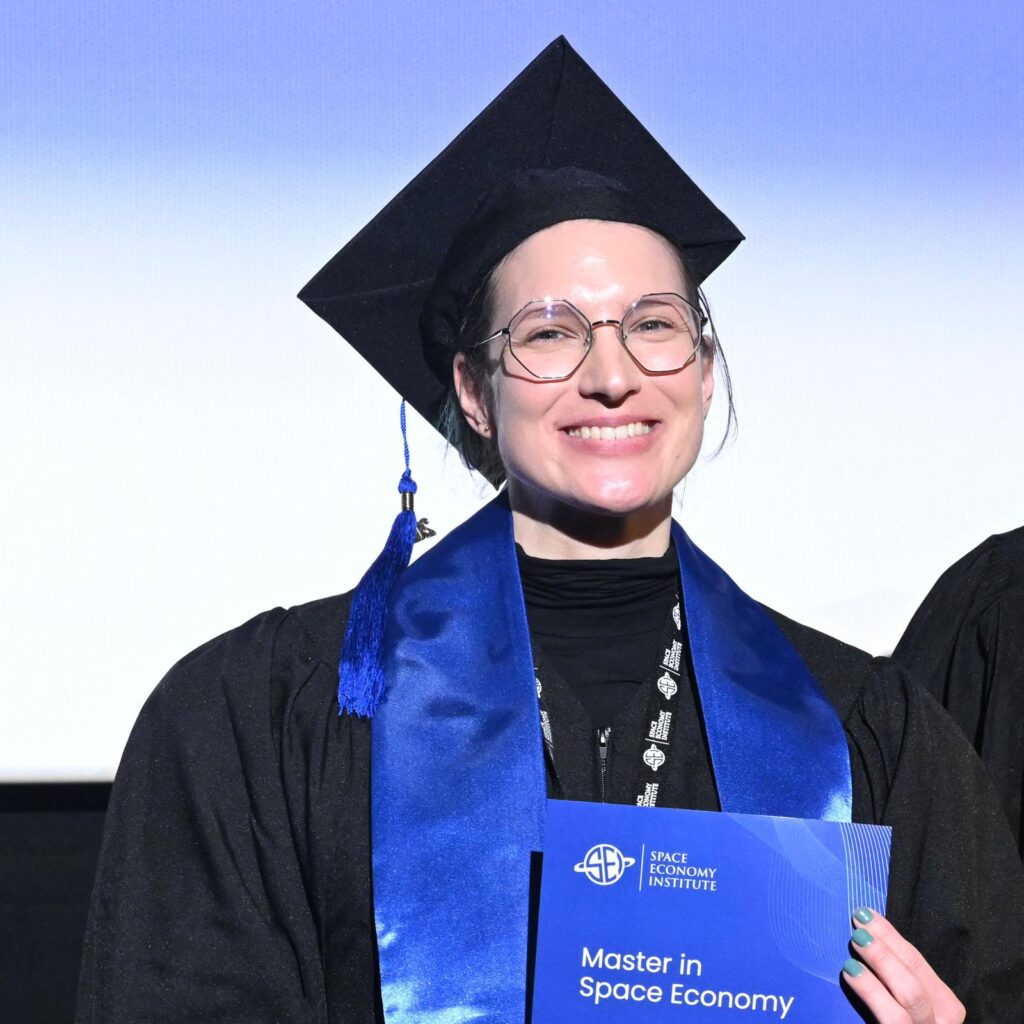
I've always had a lingering passion for space, but never been able to enter the space ecomony insdustry. One of the most important assets I got during this journey at the Space Economy Institute was to be able to learn about space applications and about space in general. The Master in Space Economy at SEI also gave me the opportunity to network with professionals who already work in this sector.
Romina Ellero - Independednt Advisor & Space Economy Professional
Program Director
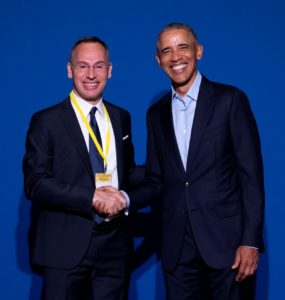
Antonio Ragusa is an internationally successful entrepreneur and founder of institutions including Rome Business School, Rome Business School Nigeria, and the Space Economy Institute.
His commitment to ethics-driven and socially responsible education has earned him numerous international awards and recognition.
As a lecturer, author, and coach, he has trained and mentored thousands of professionals worldwide while inspiring individuals to believe in themselves and pursue ambitious goals.
Learning Outcomes
- Strategic Leadership: Manage complex space systems and teams effectively.
- Market Insight: Identify emerging trends and commercial opportunities.
- Entrepreneurial Development: Build and scale innovative space ventures.
- Technological Evaluation: Assess advanced technologies for operational success.
- Legal & Regulatory Expertise: Navigate international space law and policy.
- Decision Making: Optimize project performance and resource allocation.
Who Is This Master For?
This Master is designed for entrepreneurs, managers, STEM executives, lawyers or graduatets who want to understand and lead the transformation generated by the space economy.
Through a flexible distance-learning model, participants gain advanced insight into the managerial, geopolitical, and regulatory dynamics shaping the global space industry.
It is particularly suitable for:
- aerospace, engineering and technology professionals seeking a broader managerial and strategic perspective;
- managers and executives who want to enter or better understand the space sector;
- entrepreneurs and startup founders exploring NewSpace opportunities;
- lawyers, consultants and policy professionals interested in space law, regulation and governance;
- finance, insurance and investment professionals looking at space-enabled markets;
- professionals working in telecommunications, sustainability, mobility, agriculture, defence, healthcare and other sectors impacted by space technologies;
- graduates and young professionals who want to position themselves early in a high-growth global industry.
Career Impact
The space economy is creating new professional opportunities across a wide range of sectors. Career paths are no longer limited to astronauts, scientists or engineers. Today, the industry also needs managers, business developers, policy experts, lawyers, consultants, entrepreneurs, marketers, financial professionals and innovation leaders.
Graduates of the Master may apply their knowledge in areas such as aerospace and satellite companies, space agencies, consulting firms, technology companies, telecommunications, Earth observation, insurance, finance, sustainability, government bodies, NGOs and innovative start-ups.
The master is particularly suitable for those who want to pursue a career in the following roles:
- Management & Strategy within international space agencies and aerospace companies
- Space Policy & Regulatory Advising for governments and international bodies
- Project Management for high-tech firms and space startups
- Strategic Consultancy for innovation and aerospace investment
- Financial & Investment Analysis focused on the space economy
- Space Entrepreneurship and venture creation
Why Now?
The global space economy is projected to become one of the major growth sectors of the next decade. Its expansion will not be driven only by rockets and satellites, but also by the use of space-enabled technologies across telecommunications, Earth observation, climate monitoring, agriculture, logistics, finance, defence, insurance, healthcare and many other industries.
As space becomes increasingly connected to business, policy and everyday life, the market needs a new generation of multidisciplinary professionals who can understand both the technological foundations and the economic, legal, managerial and strategic implications of this transformation.
Curriculum
The 12-month program combines seminars, workshops, live sessions, and practical learning experiences.
Students establish a robust theoretical baseline by examining the structural core of the modern space sector. This module outlines the fundamental definitions, historical milestones, and market dynamics that dictate commercial operations.
What you will learn: The definition and core importance of the space economy.
Structural Segments: Comprehensive analysis of market segments (upstream and downstream dynamics, the value chain, ahead frontiers and strategic outlook).
Contextual Evolution: The historical evolution of space commerce, mapping its trajectory from state-run programs to private ventures.
This module delivers a deep dive into the established, emerging, and frontier verticals driving commercial revenue within the orbital ecosystem.
Core Infrastructure: Strategic frameworks for launchers, launching services, space transportation, and orbital logistics.
Global Communications & Science: Advanced concepts in satellite communication, Earth observation capabilities, and centralized space research, development, and manufacturing.
Frontier Markets: Economic modeling for high-growth next-generation sectors, including space tourism and space mining/resource extraction
Students analyze how downstream space capabilities disrupt, optimize, and scale traditional terrestrial business ecosystems across public and private domains.
Infrastructure & Connectivity: The role of space assets in telecommunications, global navigation, and geospatial services.
Resource & Environment Management: Applications of orbital data in agriculture, food security, climate monitoring, and environmental management.
Socio-Political & Advanced Sectors: The intersection of space systems with defense, national security, urban planning, infrastructure development, the energy sector, and healthcare/pharmaceuticals.
Focused on commercialization and strategic execution, this module equips technical experts and executives with the skillset required to launch, fund, and manage space ventures.
Venture Creation & IP: Designing viable business models, launching start-ups, fostering innovation, and managing intellectual property and technology transfer.
Strategic Business Planning: A detailed, two-part series on rigorous corporate business planning specifically tailored to the unique economic realities of space companies.
Legal, Regulatory, & Security Frameworks: Navigating space insurance, liability issues, institutional space policies, international regulations, and space infrastructure security.
An examination of the macroeconomic risks, operational bottlenecks, and paradigm shifts defining the contemporary “NewSpace” movement.
Market Trends: Mapping the rise of NewSpace, private space corporations, and major international space programs.
Risk Mitigation: Identifying and managing severe financial and investment risks alongside technical and operational challenges.
Sustainability & Future Outlook: Managing legal hurdles, regulatory bottlenecks, and space debris. Students evaluate strategies for sustainable growth, prospective game-changers, and expert predictions for the future of the market.
Strategic Human Capital: Overcoming specific talent acquisition challenges unique to high-tech aerospace organizations.
At the end of the program, students will put the acquired knowledge into practice by working on a real-world business challenge.
Students will be required to either construct an innovative space economy business plan or formulate a strategic solution for a challenge presented by a sector organization. The final project culminates in an oral defense presented to the Academic Evaluation Committee.
Schedule, Format & Delivery
The program begins in October and runs for 12 months using a blended digital learning model.
- Live Sessions: Weekly 2-hour virtual masterclasses, on Wednesday from 6PM to 8 PM (CET)
- On-Demand Learning: Access to exclusive digital learning resources
Certification
The program is structured according to European academic standards and corresponds to the equivalent of 60 ECTS credits.
Upon completion of the program, participants receive a Certificate from the Space Economy Institute and a detailed Transcript of Records, listing the topics studied and the final grade.
Your Fast-Track to the Space Economy Institute
Need clarity on specific modules, certification details, or how the lecture format aligns with your current commitments? Skip the inbox. Connect instantly with our admissions team for a one-on-one chat about your enrollment goals.
More Than a Degree: a Space Economy Accelerator
The Master in Space Economy is designed not only to transfer knowledge, but to help participants transform knowledge into professional and entrepreneurial action.
Through the Practice Lab, Leadership Program and Capstone Project, participants move from understanding the space economy to applying concepts, developing strategies, building business models and working on real or realistic challenges connected to the sector.
This practical approach helps students develop the mindset, tools and confidence needed to operate in a complex, fast-growing and highly interdisciplinary industry.
Practice Lab
Students participate in a 10-hour immersive Practice Lab where theoretical concepts are applied through hands-on learning and real-world exercises.
The Lab is led by managers and professionals from leading national and international companies who share industry expertise, guide practical activities, and provide valuable networking opportunities.
Each Practice Lab is tailored specifically to the objectives and industry focus of the Master’s program.
Leadership Program
In the rapidly evolving Space Economy, innovation requires strong and visionary leadership.
Our Leadership Program is a practice-based development journey designed to transform participants into future-ready executives.
Through five interactive modules featuring self-assessments, simulations, and role-playing exercises, participants strengthen their leadership, communication, and strategic decision-making skills.
Capstone Project
The Capstone Project represents the culmination of the Master’s journey.
Participants take on the role of industry leaders, applying their knowledge and experience to solve a real-world business challenge within the global space ecosystem.
This final project provides the opportunity to develop innovative strategies, demonstrate executive-level thinking, and showcase your potential to the industry.
Propel Your Career in the Global Space Industry
The space sector demands more than technical proficiency; it requires vision, leadership, and strategic connections. The Career Service at the Space Economy Institute (SEI) is your dedicated partner, designed to transform your ambition into a successful positioning within this elite global market.
We aim to prepare you for the professional world with confidence, self-awareness, and a complete mastery of industry dynamics.
An Exclusive Network
Entry into the space economy is guided by those who built it. Our ecosystem comprises industry-leading institutions and a Faculty of professionals who have operated at the forefront of the space sector for decades.
This network knows the SEI Method firsthand. They recognize that our students possess exceptional talent and unparalleled preparation, which naturally facilitates a seamless entry into the market. SEI students secure premier positions not by chance, but through a proactive strategy, high-level networking, and the dedicated support of our Career Service team.
Professional and Personal Development
Within the SEI philosophy, true professional excellence cannot exist without personal maturity. We believe that the leaders of tomorrow must possess both top-tier hard skills and the inner grounding to navigate complex decisions.
For this reason, your professional advancement is closely paired with personal development. Our career coaching integrates mindset building, personal branding, and the leadership soft skills necessary to communicate, negotiate, and drive innovation with unwavering confidence.
Tailored Pathways
The modern job market is dynamic, and professional development processes are not one-size-fits-all. We recognize that our candidates join us at varying stages of their lives and careers.
Whether you are a recent graduate launching your trajectory, a manager seeking advancement, or an established professional pivoting into the space economy, we have designed several strategic routes tailored to different professional milestones. We provide the right pathway for your specific career moment.
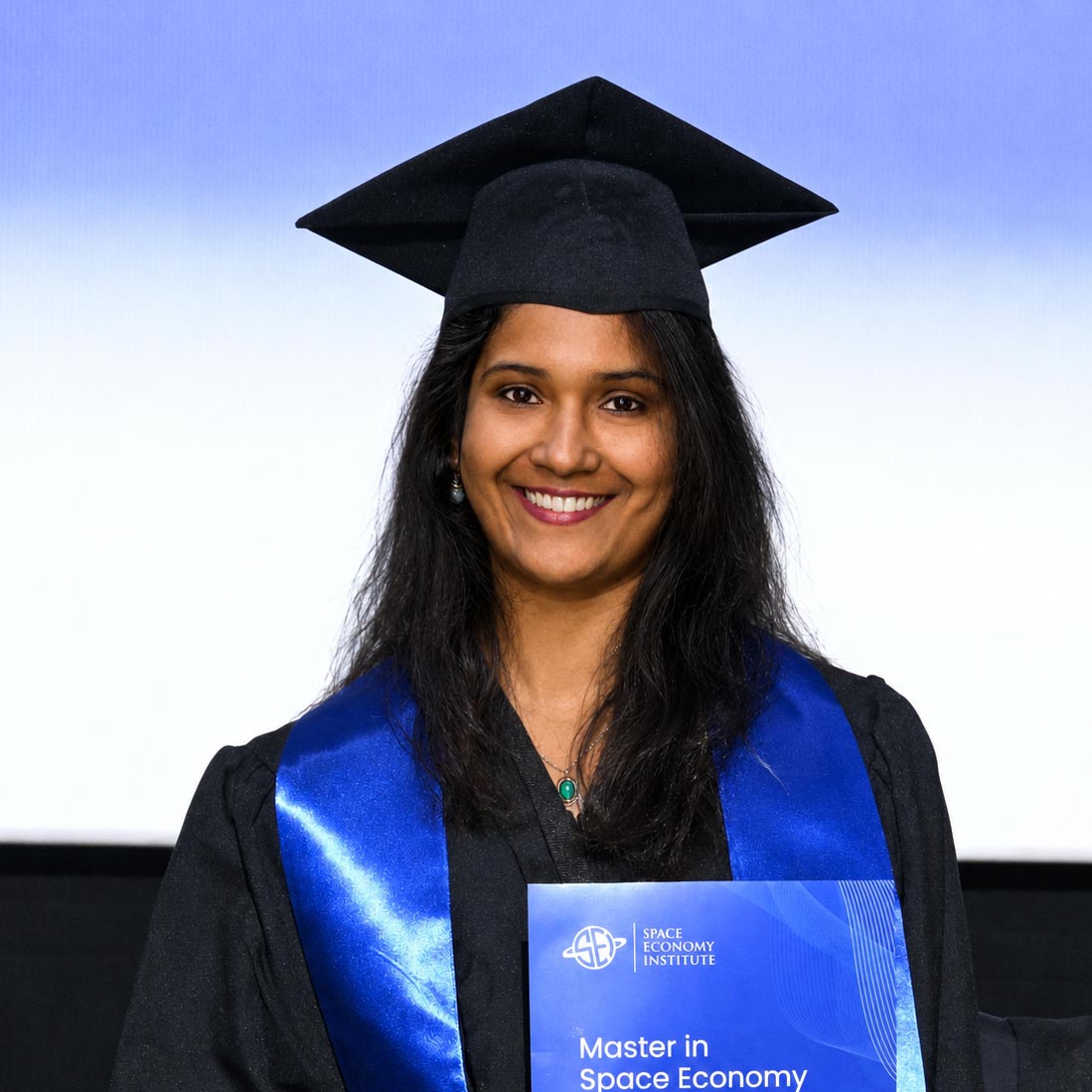
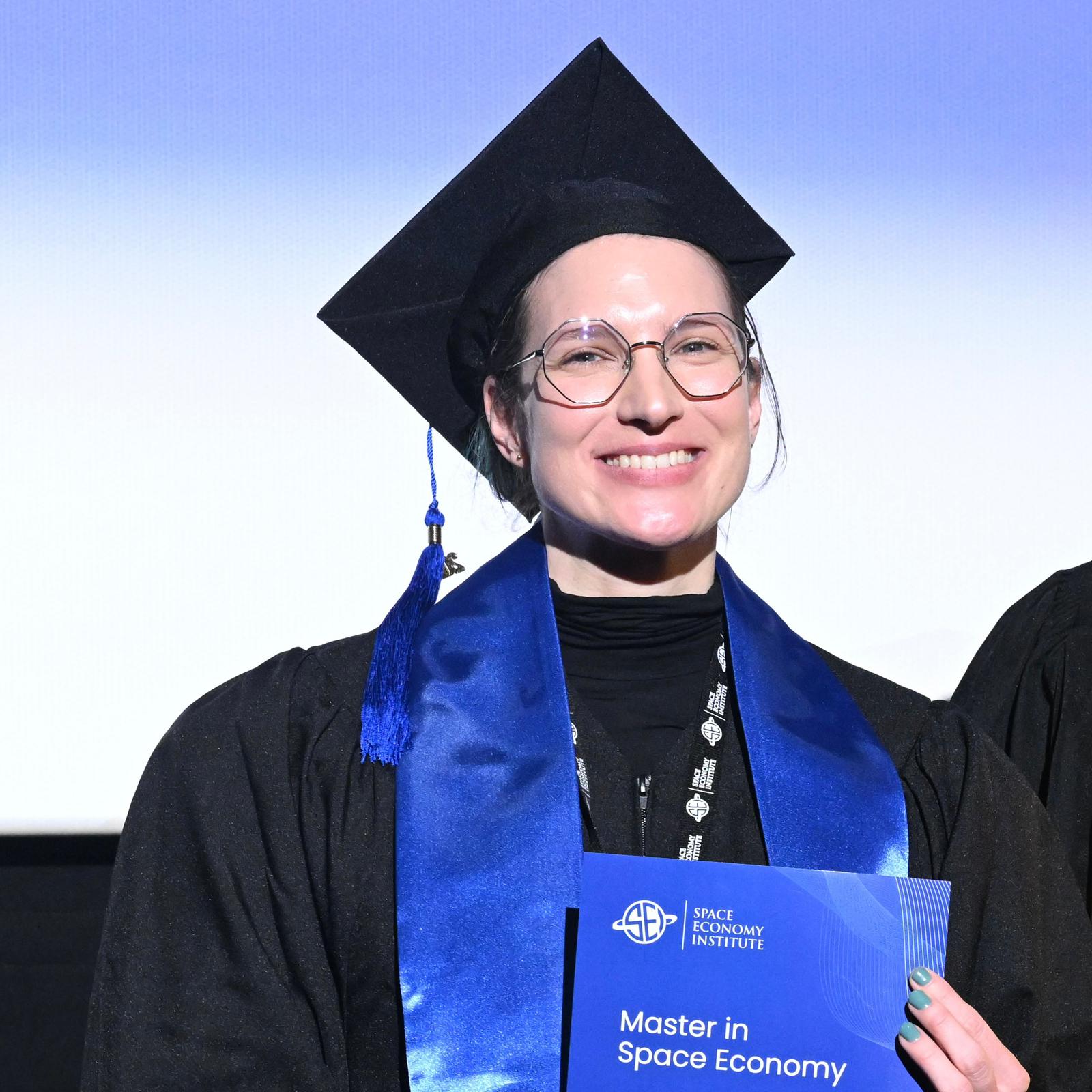
Career Stories
Take Command of Your Future
Schedule a dedicated 30-minute advisory call. We will discuss your specific career goals and determine how our faculty and alumni network can accelerate your transition into space industry leadership.
Industry Partners & Affiliations
At the Space Economy Institute, we collaborate with a global network of institutions, space agencies, research organizations, and industry leaders. These partnerships strengthen our academic programs, enhance our research capabilities, and ensure our curriculum remains aligned with the latest developments in the space economy.
Our faculty and academic contributors have developed professional, academic or research experience with leading organizations and institutions such as ESA, NASA, EUMETSAT, ASI and internationally recognized universities and research centers.
These relationships provide students with access to real-world insights, emerging industry trends, and professional opportunities within the expanding space economy.
Our faculty also contribute to innovation and governance through involvement with international advisory bodies, including the World Intellectual Property Organization (WIPO), the International Bar Association (IBA), and the European GNSS Agency (GSA).
These affiliations reflect our commitment to excellence, credibility, and global impact. By collaborating with leaders across industry, academia, and policy, we prepare students to participate in a dynamic and forward-looking global space economy.
Join the Space Economy Institute and learn alongside the institutions shaping the future of space.


Faculty
At the Space Economy Institute, our faculty represents the highest level of expertise in the space economy, bringing together leading professionals from around the world.
These experts combine academic excellence with hands-on experience across space systems, economics, law, medicine, engineering, and innovation.
Our instructors have contributed to major space missions, advised international organizations, and supported cutting-edge research that is shaping the future of the space industry.
With experience spanning institutions such as the European Space Agency, NASA, Blue Origin, and other leading organizations, our faculty provide a truly global and interdisciplinary learning perspective.
Led by founder and visionary educator Prof. Antonio Ragusa, the faculty is committed to delivering a transformative and future-focused learning experience.
Their shared passion for education, innovation, and global impact defines the mission and values of the Space Economy Institute.
By learning from experienced industry leaders, you gain access to world-class instruction, advanced knowledge, and a global network of space professionals.

Alberto Tuozzi
Alberto Tuozzi holds a Master Degree cum laude in Electronic Engineering – University of Rome La Sapienza. Presently Head of the EU Relations Unit in the Italian Space Agency (ASI) and Chair of the European Space Agency Board on Telecommunication (JCB).
Previously Head of Telecommunication and Navigation Division and Acting Chair and Vice Chair of the European GNSS Agency (GSA).
Appointed as Italian National Delegate to ESA PB-NAV (board for satellite navigation acitivies) since 2002 and advisor to the ESA Council.
National Delegate to European Union Space Committee both in the horizontal and Galileo/EGNOS configurations and National representative in the ICG (International Committee on GNSS) under UN COPOUS.
He has been working for more than 37 years in the Space Field, firstly in the industrial sector (17 years) and then in the public one, taking responsibilities for large space programme management with particular regard to design, implementation, operations and Strategic Elaboration.
His main activities have been in Space Telecommunication, Satellite Navigation and Space Strategy.
Since October 2022 is appointed as President of the E. Amaldi Foundation.
He is currently coordinator for the Italian Space Agency of several relevant space research projects, like use of artificial intelligence, and for the development of space applications for the benefit of citizens.
He has been appointed as National Delegate to ESA JCB, to ESA Industrial Policy Committee, to ESA Programme Board on Earth Observation (PB-EO), to ESA Scientific Programme Committee, and to the EUMETSAT Council.
He has been responsible for the operation of several Italian space missions (Telecommunication, Scientific and Technological missions) and for the ground segment implementation and operations of the ESA ARTEMIS satellite.
On the base of this long experience in the space sector, he also carries out teaching activities in University Masters and is author of several papers and speeches in international conferences.
Jeffrey Scallon
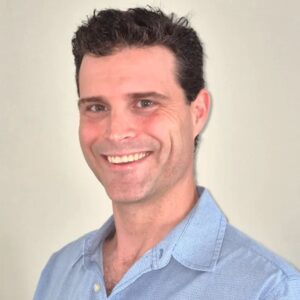
Professor Scallon is an accomplished space industry professional, with expertise spanning engineering innovation, aeromedical research, and business strategy.
As an astronaut candidate finalist in 2017, he has contributed to the advancement of aerospace technologies, including testing space suits, new aircraft design, supporting deep space missions, and launching payloads on suborbital flights.
With advanced degrees in engineering and medicine, professor Scallon integrates these disciplines to address complex challenges in science and technology.
His work in strategic financial planning and consulting has supported the development of emerging spaceflight companies, and his academic role as a professor reflects his dedication to education and mentorship.
Michelangelo Ambrosini
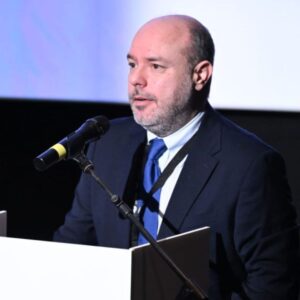
As MTG Deputy Space Segment Manager, Technical Officer And Operations at EUMETSAT, Michelangelo Ambrosini has extensive experience in spacecraft operations and simulations, particularly in the field of Earth
observation and remote sensing.
Currently serving as a Faculty Member at the Space Economy Institute, Michelangelo has also worked with organizations such as EUMETSAT, European Commission, LSE Space GmbH, DLR GfR mbH, Telespazio Germany GmbH, Thales Alenia Space, and the European Space Agency. Their roles have included responsibilities in system engineering, flight control team membership, simulations management, and training coordination. Michelangelo holds certifications in project management, quality management systems, and various Earth observation and remote sensing applications. Their diverse background showcases a wealth of expertise in the space industry.

Kelly Soverns
Kelly Soverns is a seasoned space professional with over 15 years of experience in the aerospace industry, with a particular focus on space systems. She holds dual master’s degrees—one in Space Studies with a concentration in space policy, and another in International Relations, specializing in conflict resolution.
Currently, she is advancing research in space governance and international space cooperation, exploring how evolving norms and institutions shape the global space economy. She is the author of an ongoing Space Economy series on LinkedIn that examines commercial, strategic, and policy dimensions of space activity. In parallel, she contributes to NASA analog space missions in roles spanning communications, science operations, and human factors research—collaborating with teams through the American Public University System (APUS) and the University of North Dakota (UND). She is also preparing for two upcoming missions in 2025, serving as a Mission Control team member.
Her work reflects a deep commitment to shaping the future of space through interdisciplinary insight, hands on experience, and thought leadership. She is currently drafting a PhD research proposal on space governance and global cooperation frameworks, with the aim of contributing new perspectives to emerging space law and policy discourse.

Marco Mongiello
With over two decades of experience in UK Higher Education and as a Chartered Accountant with the Institute of Chartered Accountants for England and Wales (ICAEW), Marco champions the vision of bringing a positive impact on society, by contributing to and nurturing the values of responsible and creative leadership in businesses and wider communities globally, through education. Marco has served The University of Law as Pro Vice-Chancellor for Business and Science, the University of Surrey as Dean International, and Executive Director for PG Programmes in the Business School. Prior to that, he served at the Imperial College Business School, where he launched and led world ranked MSc and MBA
programmes. Marco contributes to the operations of UK and international bodies aimed at upholding and redefining the highest standards of education globally. Marco holds a PhD and has a research interest in performance measurement and management.
Marco has had an impact in policy making. Expert in quality measurement and management. Champion of innovation in student experience and social purpose. Pioneer of AI in Education.

Gabrielle Caswell
Dr. Gabrielle Caswell is a pioneering practitioner-scholar at the intersection of orbital infrastructure and human endurance. As the founder of Space Port Australia—an independent research hub predating the Australian Space Agency—she holds the rare distinction of being the only clinician worldwide to own and operate a spaceport. Currently leading an EU-accredited global Masters program in Space Health and Human Factors, Dr. Caswell’s work is fundamental to the commercial viability of long-term space habitation, focusing on the biological and structural requirements for human life in microgravity.
Beyond her clinical and technical expertise, Dr. Caswell is a seasoned strategist with over 25 years of experience in government bodies, commercial media, legislation requirements and lobbying. Her role as an eight-time finalist for the Australia Space Awards and her Fellowship with the Aerospace Human Factors Association highlight her influence in shaping the frameworks of the modern space sector. By bridging the gap between molecular research and macro-scale space policy, she provides students with an integrated understanding of the human, legal, and commercial assets required to sustain a thriving extraterrestrial economy.

Ryan Anderson
As a space systems engineer with over 20 years’ experience, Ryan has worked on dozens of satellite programs spanning the whole lifecycle of design, development, and operations. Ryan was instrumental in the early development of Telesat’s Lightspeed constellation. Other highlights include work on COSPAS-SARSAT, Polar Communications and Weather, Anik F2, Anik G1, Nimiq 6, NEOSSat, and many other programs in the private and public sector.
Ryan graduated, cum laude, from the University of Ottawa in 2004 with bachelor degrees in Mechanical Engineering and Computing Technology. His studies included an undergraduate thesis on earth observation satellite systems. In 2016, he completed a Master of Applied Science in Aerospace engineering at Carleton University with a thesis focused on systems and thermal design of a satellite for polar communications.
An active member of space and engineering communities, Ryan is President of the Canadian Space Society, a registered Canadian charity that provides outreach and education about Canadian space activities. The CSS is currently supporting several space-based technical programs in Canada such as the high school CanSat competition and the university level Launch Canada competition.
Ryan is also the founder and board member of Satellite Canada Innovation Network, a not-for-profit industry association dedicated to driving the competitiveness of the Canadian space industry. Since 2016, Satcan has provided strategic consulting services to small and medium enterprises in and adjacent to the space sector. In collaboration with the National Research Council, SatCan helped establish the Optical Satcom Consortium (OSC), to advance Canadian R&D in this emerging field.
Ryan serves on the Board of Advisors for the Students for Exploration and Development of Space and has served as a board member of for-profit corporations. He has volunteered for the National Research Council’s Marsville and Engineering Challenge programs to encourage Canadian students to pursue careers in science and engineering and served as Lead Engineer on the 31 st Crew at the Mars Desert Research Station.
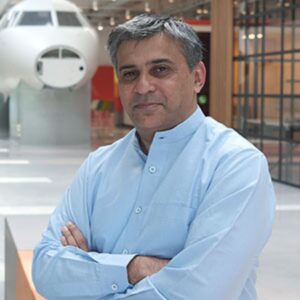
Anilkumar Dave
Mr. Dave started his career as an IT specialist between Italy, USA and India before managing EU co-funded R&D and Tech. Transf. (TT) initiatives representing public organizations (e.g. Italian Min. of Econ. Dev., Regional Innovation Agency, etc) and private entities focusing on interaction between Res. and Ind. He designed, launched and directed the “Innovation and TT” Unit at ASI (Italian Space Agency) working on New Space Economy topics, namely start-ups, risk finance and IPR, before becoming Open Innovation advisor to the president and coordinator of the ASI OECD team. He founded the first Space Economy advisory firm in Italy and is currently member of the board of Global Entrepreneurship Network Space, advisor of Polytechnic of Milan Space Economy observatory and of Italian Institute of Technology Space lab. Since 2022 he has been a partner of the VC fund ‘Star Tech Venture’. Mr. Dave has worked in different sectors ranging from textile/clothing to footwear, from logistics to households, from FMCGs to Agro-food and acknowledged in the past as Strategy Advisor for Research organizations in pediatrics hemato-oncology and micro-nano fabrication. He is regularly invited as speaker to international events and lectureships
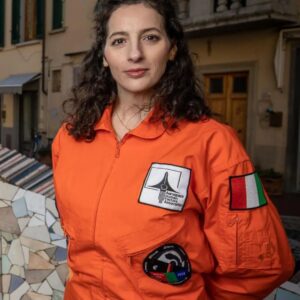
Ilaria Cinelli
Ilaria is a Fellow of the Aerospace Medical Association, President of the Aerospace Human Factors Association and a Member-at-Large of the Aerospace Medical Council. She is also Co-Leader of the Space Exploration Group of the Space Generation Advisory Council and an invited member of The Mars Society Steering Committee. In the end, she is a Mentor and Role Model of the Space4Women network of the United Nations Office for Outer Space Affairs.
Her work experiences are in biomedical engineering, neural engineering, human factors, mission design, analogue missions, space medicine, leadership, coaching and management, business development. A few awards include the ESA scholarship 2018 by the International Space University, the Anita Mantri Scholarship 2018 by the Aerospace Medical Association and two Emerging Space Leaders Scholarships (2016 and 2017) by The Mars Society.
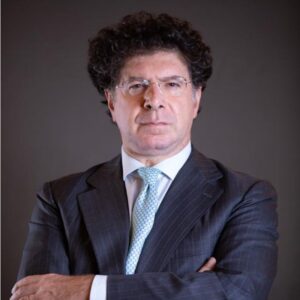
Massimo Sterpi
Prof. Massimo Sterpi specializes in the field of intellectual property, in which he has acquired a great deal of experience in judicial and extrajudicial matters relating to patents, designs, copyrights and trademarks. In recent years, he has been very active in legal matters relating to Disruptive Technologies, with a particular focus on Artificial Intelligence, Blockchain and robotics. He has assisted in numerous IP cases, many of which involve cross-border issues, both before Italian and foreign courts, including the European Court of Justice. A passionate art collector, he has also gained internationally recognized experience in the field of art law, representing world-renowned artists, institutions and collectors.
Massimo graduated in Law cum laude from the University of Turin in 1989 and obtained a Post-graduate Diploma in “UK and EC Law of Copyright and Related Rights” from King’s College London in 2000. He also spent training periods in prestigious international firms in London in 1994 and Munich in 1995.
In 2023 he was awarded as “Professional of the Year – Art” at the Legalcommunity IP&TMT Awards. He is the author and editor of numerous publications, especially in foreign languages, on industrial property and art law. Furthermore, he often participates as a speaker at numerous conferences at both national and
international level.
Massimo is included in the WIPO List of Mediators and Arbitrators in Intellectual Property Matters, as well as in the WIPO List of Arbitrators in Art and Cultural Heritage Matters. He was President of the Commission on Art Law, Cultural Institutions and Artistic Heritage of the IBA and is currently President of the Art Law Committee of the UIA.
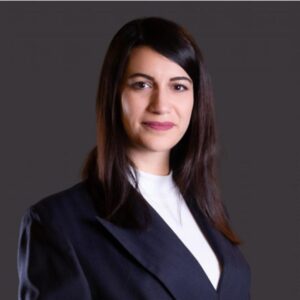
Ludovica Rossi
Ludovica Rossi deals with civil litigation, with a focus on insurance law, providing assistance and advice even in the extrajudicial phase. Before joining Gianni & Origoni, she collaborated with a leading Italian law firm, with offices in Italy and abroad. She graduated in Law at University “Roma Tre” in 2015. She was admitted to the Italian Bar in 2017 and became a member in 2018.

Laura Camardelli
Laura Camardelli is a lawyer specialized in new technologies and space law. She currently collaborates with the Cybersecurity, Data Protection and Space Law department of the Gianni & Origoni law firm and has gained experience at leading Italian and international law firms.
She is a speaker at national and international conferences and conventions and author of numerous scientific publications in the field of law applied to new technologies, cybersecurity and the space economy.
She graduated cum laude from the Alma Mater Studiorum – University of Bologna in 2019 and simultaneously obtained an LL.M. in Intellectual Property and Information Law from King’s College London.

Natasha Valentine
In her role as a Human Resources Consultant, Natasha, with considerable experience in talent management, recognizes the importance of fostering an inclusive culture in the workplace. She has developed and delivered conferences, workshops/presentations on diversity recruiting, workplace bias and intercultural
communication in university and corporate academic settings. Over 20 years of experience in Human Resources (Canada and Italy). For over 7 years Program Director at the Rome Business School for the Master in Human Resources Management, Global and International.
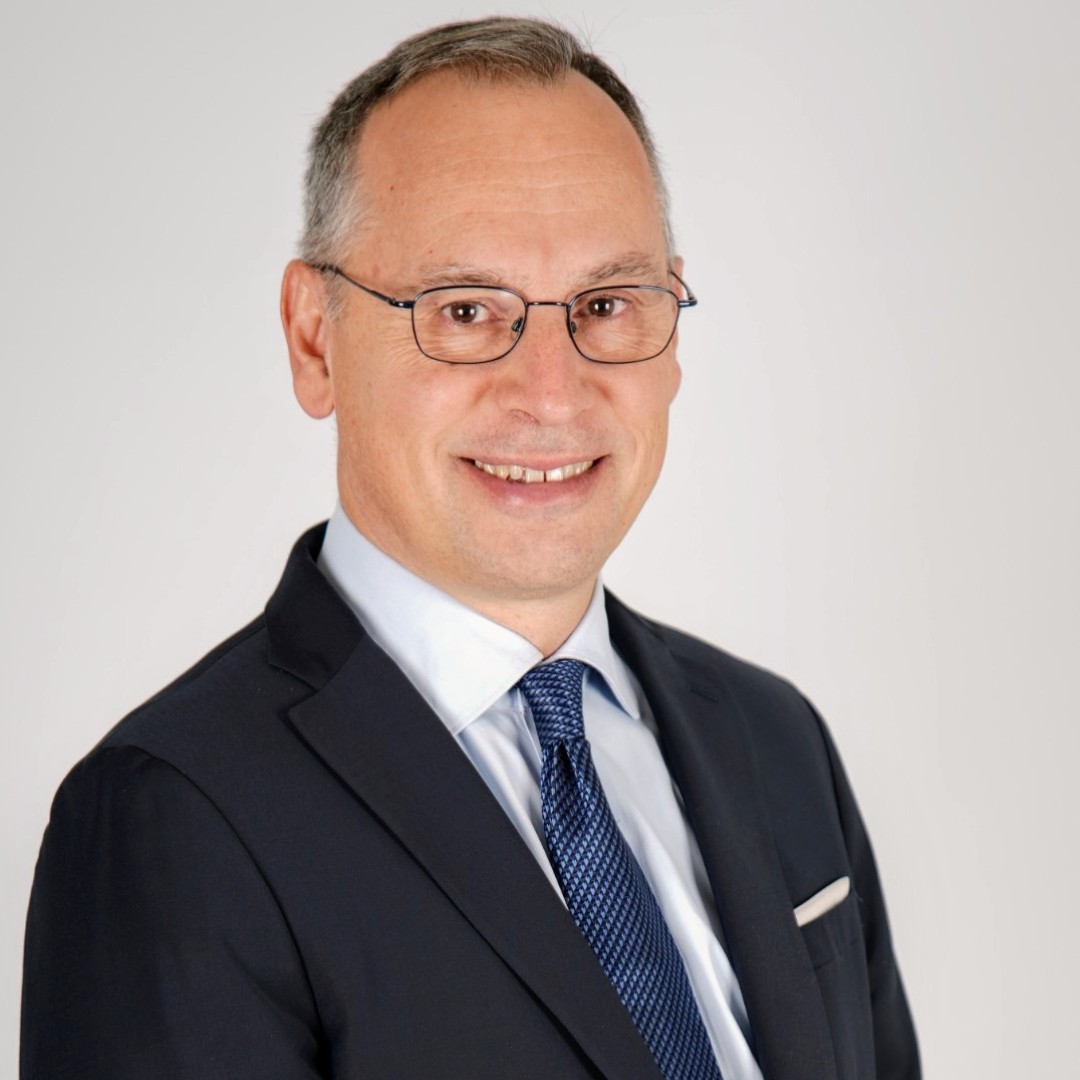
Antonio Ragusa – Program Director
Prof. Ragusa is an internationally successful entrepreneur and founder of institutions including Rome Business School, Rome Business School Nigeria, and the Space Economy Institute. His commitment to ethics-driven and socially responsible education has earned him numerous international awards and recognition.
As a lecturer, author, and coach, he has trained and mentored thousands of professionals worldwide while inspiring individuals to believe in themselves and pursue ambitious goals.
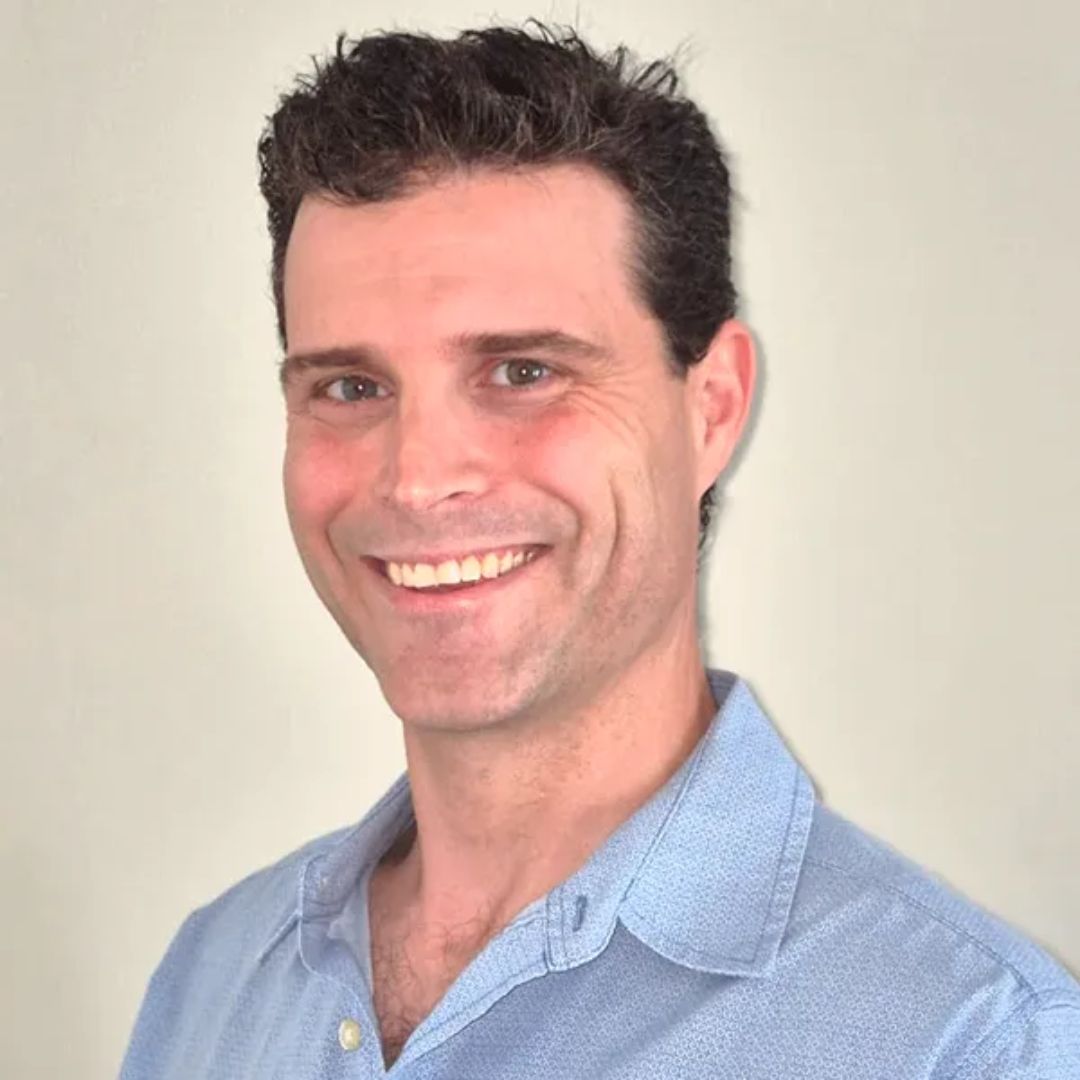
Jeffrey Scallon
Prof. Scallon is an accomplished space industry professional, with expertise spanning engineering innovation, aeromedical research, and business strategy.
As an astronaut candidate finalist in 2017, he has contributed to the advancement of aerospace technologies, including testing space suits, new aircraft design, supporting deep space missions, and launching payloads on suborbital flights.
With advanced degrees in engineering and medicine, professor Scallon integrates these disciplines to address complex challenges in science and technology.
His work in strategic financial planning and consulting has supported the development of emerging spaceflight companies, and his academic role as a professor reflects his dedication to education and mentorship.
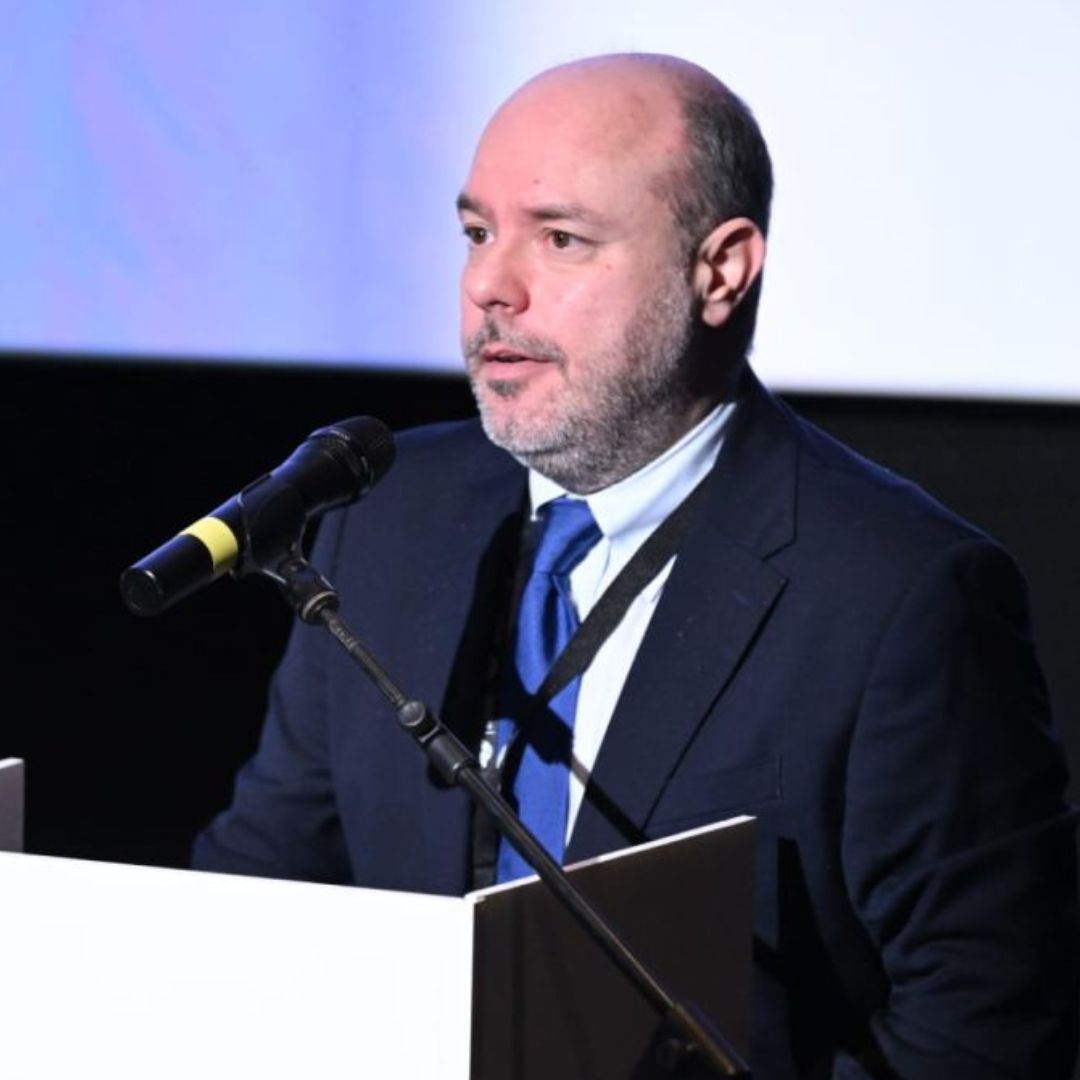
Michelangelo Ambrosini
As MTG Deputy Space Segment Manager, Technical Officer And Operations at EUMETSAT, Prof. Ambrosini has extensive experience in spacecraft operations and simulations, particularly in the field of Earth observation and remote sensing.
Prof. Ambrosini has also worked with organizations such as Thales Alenia Space, the European Space Agency (ESA), European Commission, LSE Space GmbH, DLR GfR mbH, and Telespazio Germany GmbH. Their roles have included responsibilities in system engineering, flight control team membership, simulations management, and training coordination. He holds certifications in project management, quality management systems, and various Earth observation and remote sensing applications.
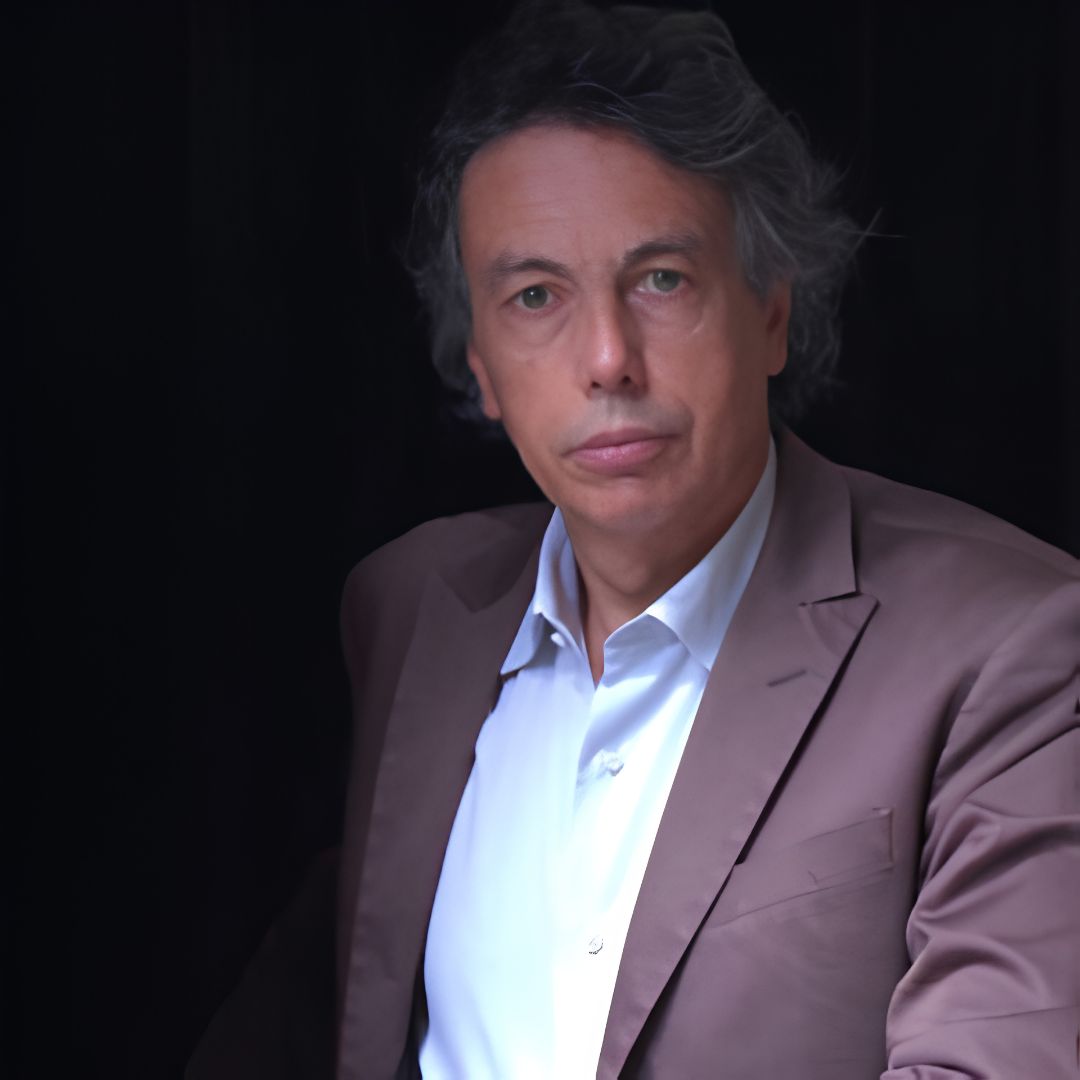
Alberto Tuozzi
With over 40 years of experience in the Space industry, Prof. Alberto Tuozzi is presently Head of the EU Relations Unit in the Italian Space Agency (ASI) and Chair of the European Space Agency Board on Telecommunication (JCB).
Previously Head of Telecommunication and Navigation Division and Acting Chair and Vice Chair of the European GNSS Agency (GSA).
Appointed as Italian National Delegate to ESA PB-NAV (board for satellite navigation acitivies) since 2002 and advisor to the ESA Council.
National Delegate to European Union Space Committee both in the horizontal and Galileo/EGNOS configurations and National representative in the ICG (International Committee on GNSS) under UN COPOUS.
Prof. Tuozzi holds a Master Degree cum laude in Electronic Engineering from University of Rome La Sapienza.
His main activities have been in Space Telecommunication, Satellite Navigation and Space Strategy.
Since October 2022 is appointed as President of the E. Amaldi Foundation.
He is currently coordinator for the Italian Space Agency of several relevant space research projects, like use of artificial intelligence, and for the development of space applications for the benefit of citizens.
He has been appointed as National Delegate to ESA JCB, to ESA Industrial Policy Committee, to ESA Programme Board on Earth Observation (PB-EO), to ESA Scientific Programme Committee, and to the EUMETSAT Council.
He has been responsible for the operation of several Italian space missions (Telecommunication, Scientific and Technological missions) and for the ground segment implementation and operations of the ESA ARTEMIS satellite.

Kelly Soverns
Prof. Soverns is a seasoned space professional with over 15 years of experience in the aerospace industry, with a particular focus on space systems. She holds dual master’s degrees—one in Space Studies with a concentration in space policy, and another in International Relations, specializing in conflict resolution.
Currently, she is advancing research in space governance and international space cooperation, exploring how evolving norms and institutions shape the global space economy. She is the author of an ongoing Space Economy series on LinkedIn that examines commercial, strategic, and policy dimensions of space activity. In parallel, she contributes to NASA analog space missions in roles spanning communications, science operations, and human factors research—collaborating with teams through the American Public University System (APUS) and the University of North Dakota (UND).
Her work reflects a deep commitment to shaping the future of space through interdisciplinary insight, hands on experience, and thought leadership. She is currently drafting a PhD research proposal on space governance and global cooperation frameworks, with the aim of contributing new perspectives to emerging space law and policy discourse.
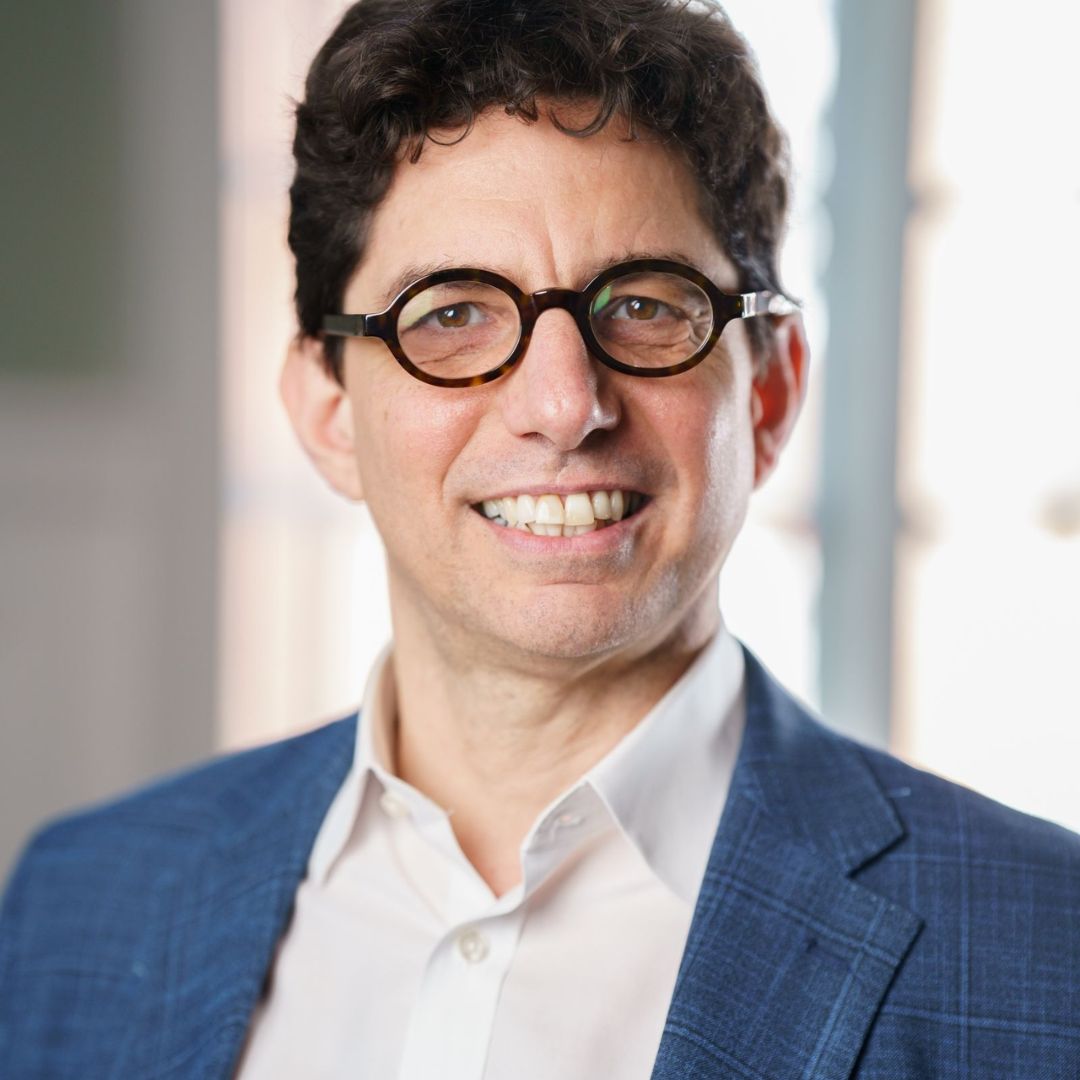
Marco Mongiello
With over two decades of experience in UK Higher Education and as a Chartered Accountant with the Institute of Chartered Accountants for England and Wales (ICAEW), Prof. Mongiello champions the vision of bringing a positive impact on society, by contributing to and nurturing the values of responsible and creative leadership in businesses and wider communities globally, through education. He has served The University of Law as Pro Vice-Chancellor for Business and Science, the University of Surrey as Dean International, and Executive Director for PG Programmes in the Business School. Prior to that, he served at the Imperial College Business School, where he launched and led world ranked MSc and MBA
programmes. He contributes to the operations of UK and international bodies aimed at upholding and redefining the highest standards of education globally. Prof. Mongiello holds a PhD and has a research interest in performance measurement and management.
He has had an impact in policy making. Expert in quality measurement and management. Champion of innovation in student experience and social purpose. Pioneer of AI in Education.

Gabrielle Caswell
Dr. Gabrielle Caswell is a pioneering practitioner-scholar at the intersection of orbital infrastructure and human endurance. As the founder of Space Port Australia—an independent research hub predating the Australian Space Agency—she holds the rare distinction of being the only clinician worldwide to own and operate a spaceport. Currently leading an EU-accredited global Masters program in Space Health and Human Factors, Dr. Caswell’s work is fundamental to the commercial viability of long-term space habitation, focusing on the biological and structural requirements for human life in microgravity.
Beyond her clinical and technical expertise, Dr. Caswell is a seasoned strategist with over 25 years of experience in government bodies, commercial media, legislation requirements and lobbying. Her role as an eight-time finalist for the Australia Space Awards and her Fellowship with the Aerospace Human Factors Association highlight her influence in shaping the frameworks of the modern space sector. By bridging the gap between molecular research and macro-scale space policy, she provides students with an integrated understanding of the human, legal, and commercial assets required to sustain a thriving extraterrestrial economy.
Ryan Anderson
As a space systems engineer with over 20 years’ experience, Prof. Anderson has worked on dozens of satellite programs spanning the whole lifecycle of design, development, and operations. He was instrumental in the early development of Telesat’s Lightspeed constellation. Other highlights include work on COSPAS-SARSAT, Polar Communications and Weather, Anik F2, Anik G1, Nimiq 6, NEOSSat, and many other programs in the private and public sector.
Prof. Anderson graduated, cum laude, from the University of Ottawa in 2004 with bachelor degrees in Mechanical Engineering and Computing Technology. His studies included an undergraduate thesis on earth observation satellite systems. In 2016, he completed a Master of Applied Science in Aerospace engineering at Carleton University with a thesis focused on systems and thermal design of a satellite for polar communications.
An active member of space and engineering communities, he is President of the Canadian Space Society, a registered Canadian charity that provides outreach and education about Canadian space activities. The CSS is currently supporting several space-based technical programs in Canada such as the high school CanSat competition and the university level Launch Canada competition.
Prof. Anderson is also the founder and board member of Satellite Canada Innovation Network, a not-for-profit industry association dedicated to driving the competitiveness of the Canadian space industry. Since 2016, Satcan has provided strategic consulting services to small and medium enterprises in and adjacent to the space sector. In collaboration with the National Research Council, SatCan helped establish the Optical Satcom Consortium (OSC), to advance Canadian R&D in this emerging field.
He serves on the Board of Advisors for the Students for Exploration and Development of Space and has served as a board member of for-profit corporations. He has volunteered for the National Research Council’s Marsville and Engineering Challenge programs to encourage Canadian students to pursue careers in science and engineering and served as Lead Engineer on the 31 st Crew at the Mars Desert Research Station.
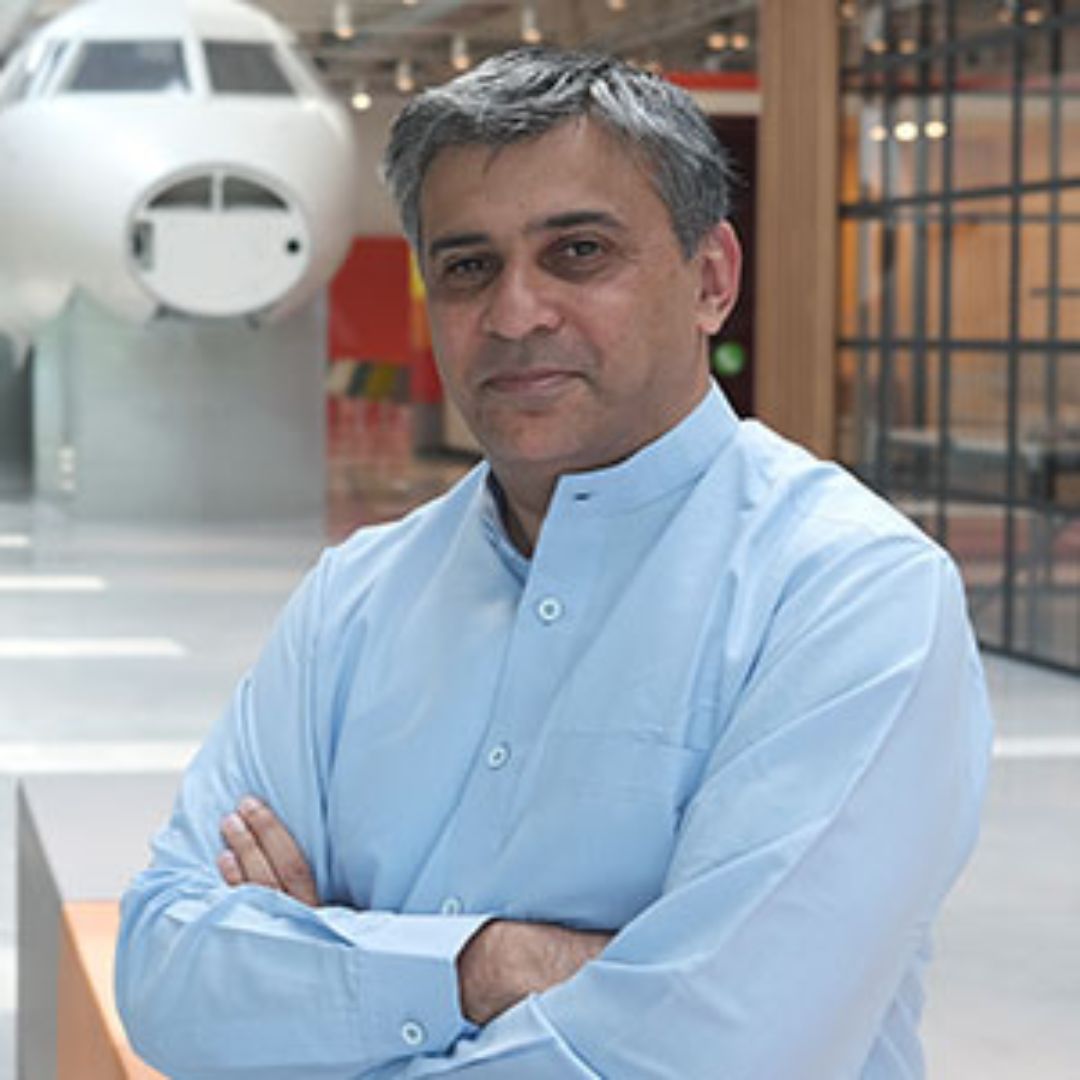
Anilkumar Dave
Starting his career as an IT specialist between Italy, USA and India, Prof. Dave designed, launched and directed the “Innovation and Tech Transformation” Unit at the Italian Space Agency (ASI). Working on New Space Economy topics, namely start-ups, risk finance and IPR, he became Open Innovation advisor to the president and coordinator of the ASI OECD team. He founded the first Space Economy advisory firm in Italy and is currently member of the board of Global Entrepreneurship Network Space, advisor of Polytechnic of Milan Space Economy observatory and of Italian Institute of Technology Space lab. Since 2022 he has been a partner of the VC fund ‘Star Tech Venture’. Prof. Dave has worked in different sectors ranging from textile to footwear, from logistics to households, from FMCGs to Agro-food and acknowledged in the past as Strategy Advisor for Research organizations in pediatrics hemato-oncology and micro-nano fabrication. He is regularly invited as speaker to international events and lectureships.
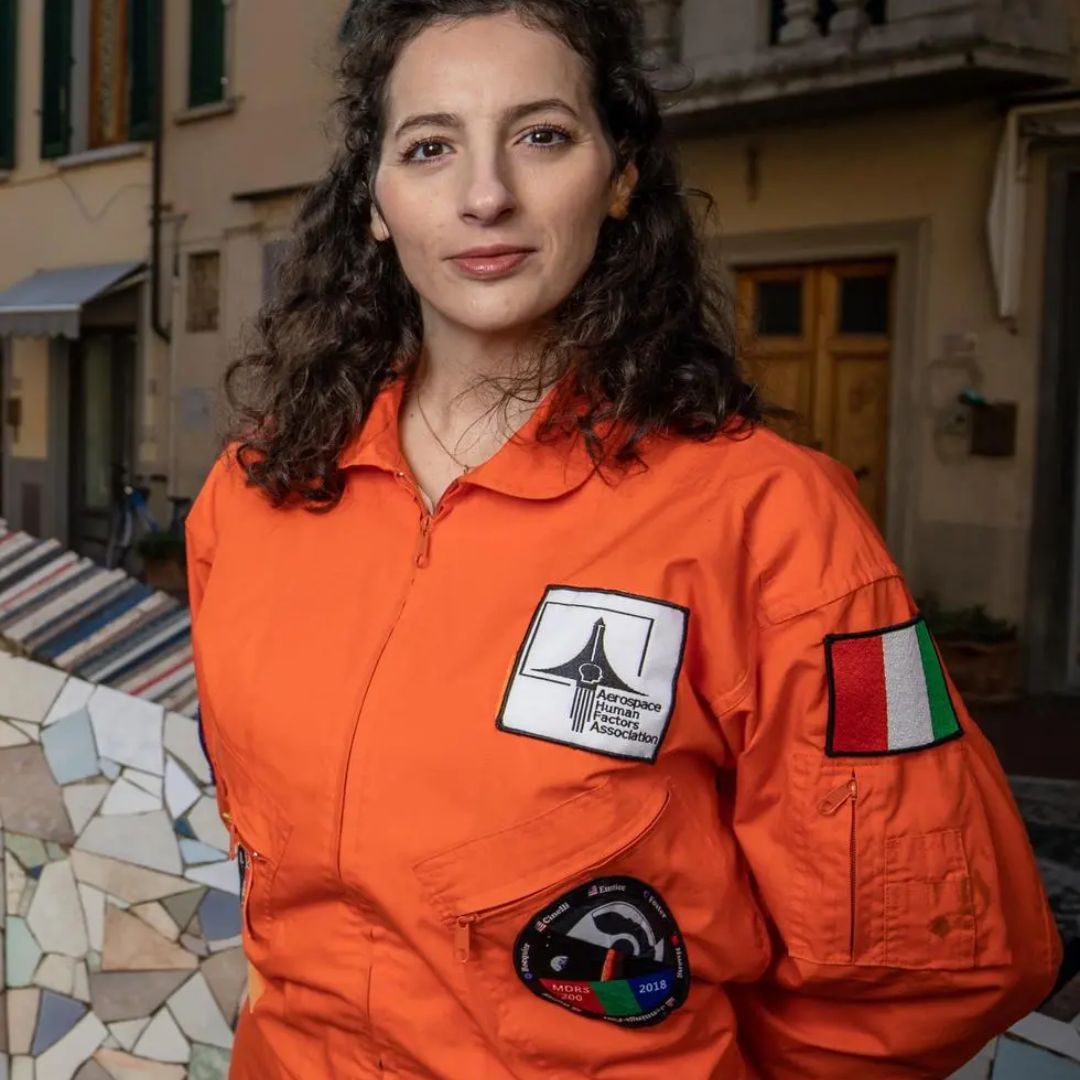
Ilaria Cinelli
Prof. Cinelli is a Fellow of the Aerospace Medical Association, President of the Aerospace Human Factors Association and a Member-at-Large of the Aerospace Medical Council. She is also Co-Leader of the Space Exploration Group of the Space Generation Advisory Council and an invited member of The Mars Society Steering Committee. Furthermore, she is a Mentor and Role Model of the Space4Women network of the United Nations Office for Outer Space Affairs.
Her work experiences are in biomedical engineering, neural engineering, human factors, mission design, analogue missions, space medicine, leadership, coaching and management, business development. A few awards include the ESA scholarship 2018 by the International Space University, the Anita Mantri Scholarship 2018 by the Aerospace Medical Association and two Emerging Space Leaders Scholarships (2016 and 2017) by The Mars Society.
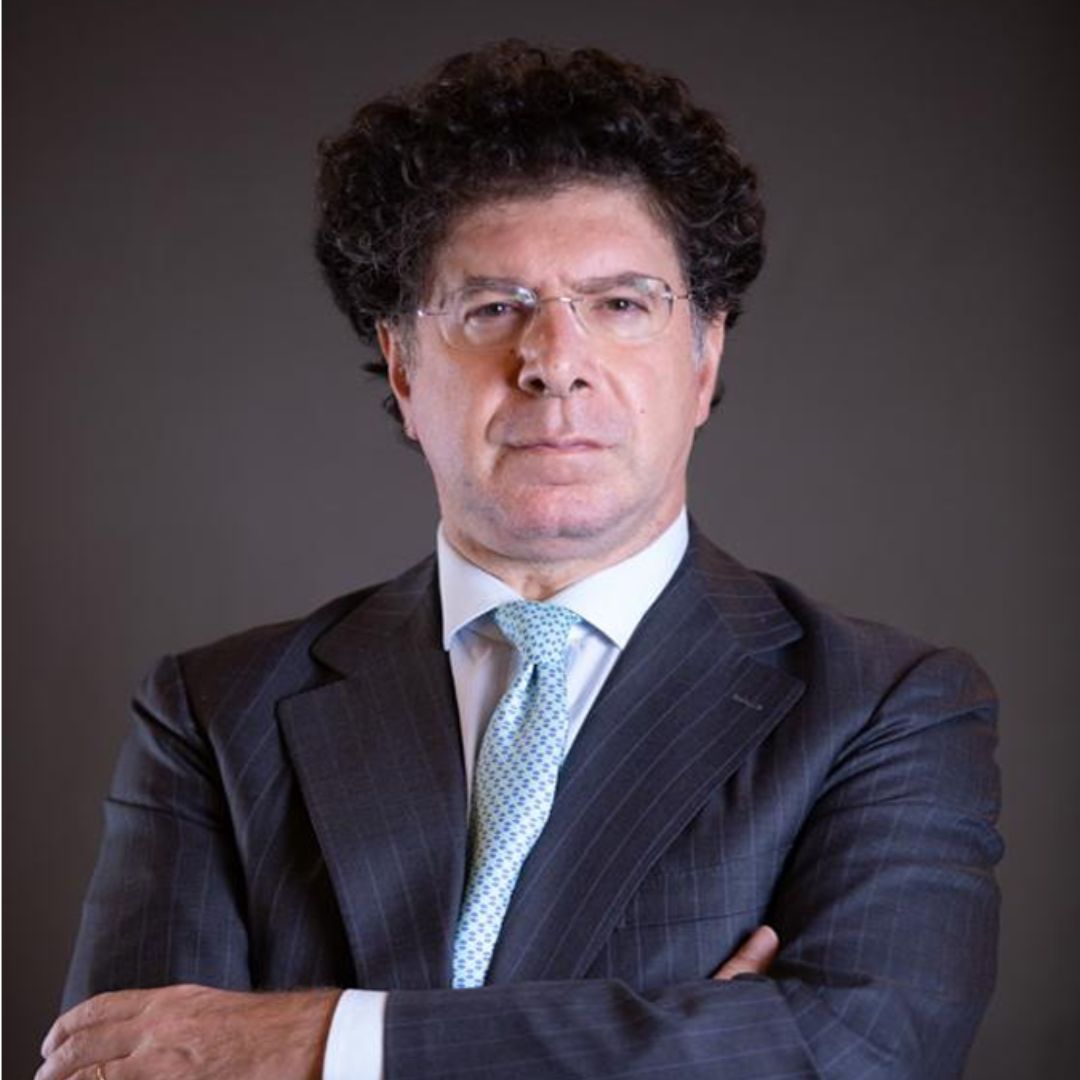
Massimo Sterpi
Prof. Sterpi is a lawyer specialized in the field of intellectual property, with decades of experience in judicial and extrajudicial matters relating to patents, designs, copyrights and trademarks. In recent years, he has been very active in legal matters relating to Disruptive Technologies, with a particular focus on Artificial Intelligence, Blockchain and robotics. He has assisted in numerous IP cases, many of which involve cross-border issues, both before Italian and foreign courts, including the European Court of Justice.
Massimo graduated in Law cum laude from the University of Turin in 1989 and obtained a Post-graduate Diploma in “UK and EC Law of Copyright and Related Rights” from King’s College London in 2000. He also spent training periods in prestigious international firms in London in 1994 and Munich in 1995.
He is the author and editor of numerous publications, especially in foreign languages, on industrial property and art law. Furthermore, he often participates as a speaker at numerous conferences at both national and international level.
Massimo is included in the WIPO List of Mediators and Arbitrators in Intellectual Property Matters, as well as in the WIPO List of Arbitrators in Art and Cultural Heritage Matters. He was President of the Commission on Art Law, Cultural Institutions and Artistic Heritage of the IBA and is currently President of the Art Law Committee of the UIA.
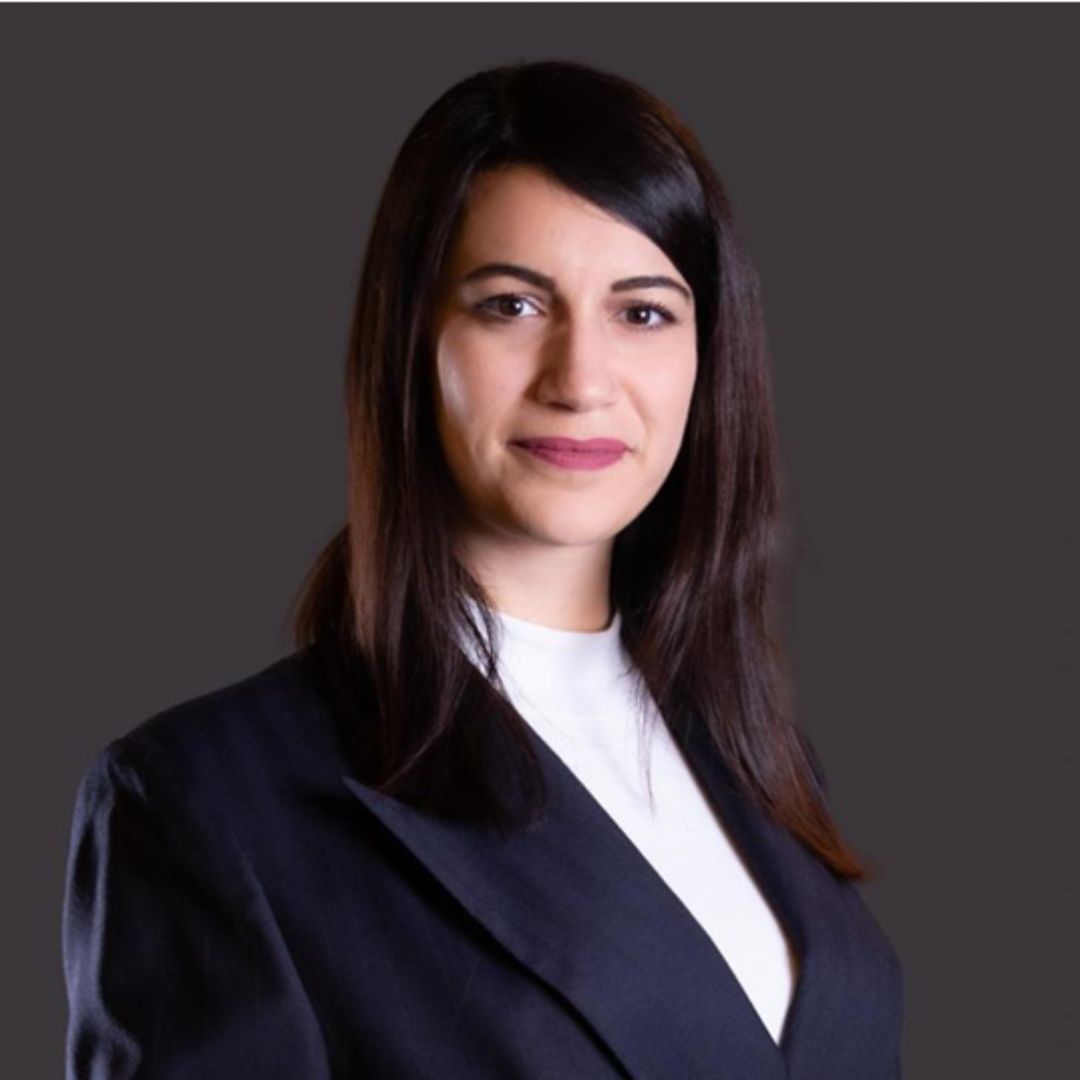
Ludovica Rossi
Prof. Rossi deals with civil litigation, with a focus on insurance law, providing assistance and advice even in the extrajudicial phase. Before joining Gianni & Origoni, she collaborated with a leading Italian law firm, with offices in Italy and abroad. She graduated in Law at University “Roma Tre” in 2015. She was admitted to the Italian Bar in 2017 and became a member in 2018.
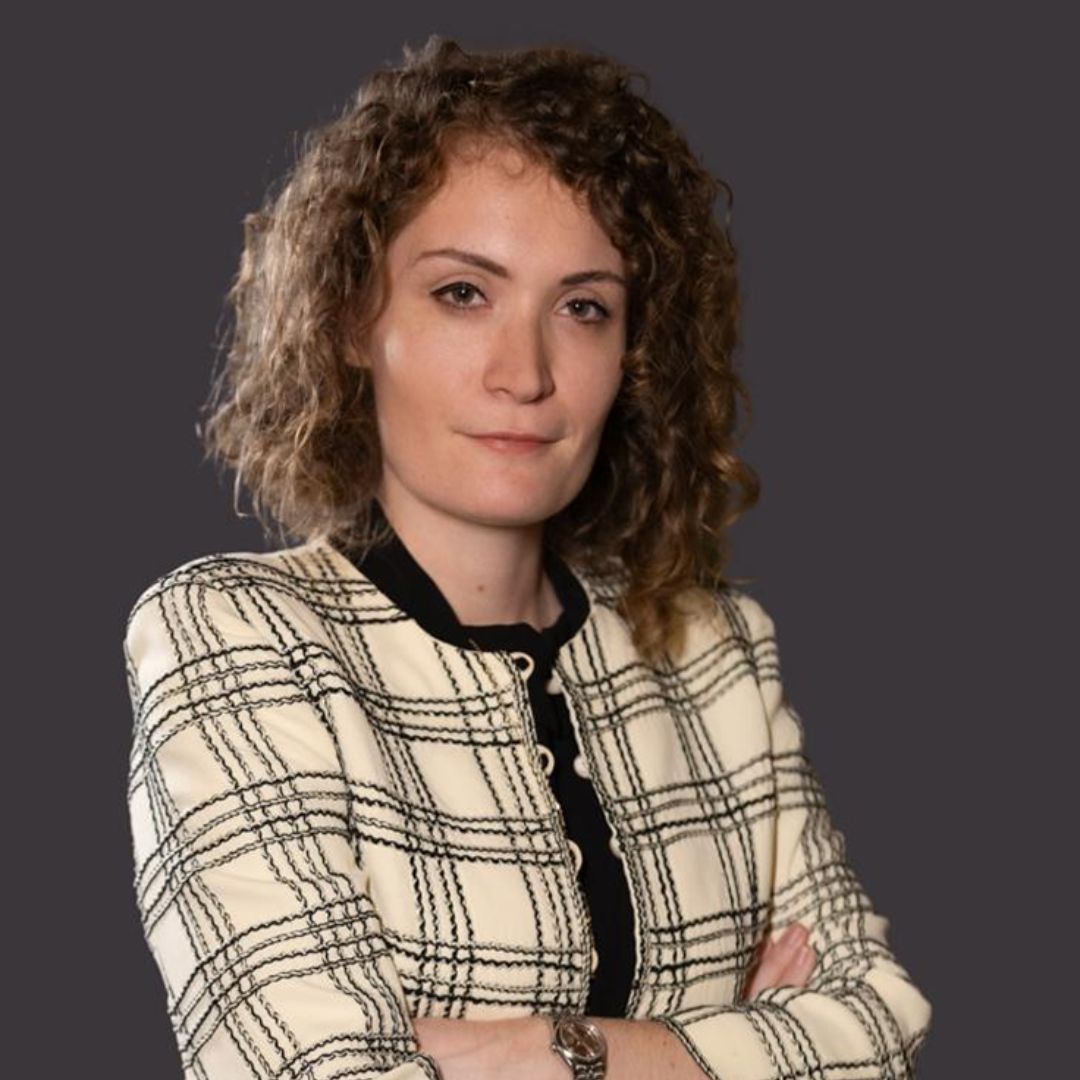
Laura Camardelli
Prof. Camardelli is a lawyer specialized in New Technologies & Space Law. She currently collaborates with the Cybersecurity, Data Protection and Space Law department of the Gianni & Origoni law firm and has gained experience at leading Italian and international law firms.
She is a speaker at national and international conferences and conventions and author of numerous scientific publications in the field of law applied to new technologies, cybersecurity and the space economy.
She graduated cum laude from the Alma Mater Studiorum – University of Bologna in 2019 and simultaneously obtained an LL.M. in Intellectual Property and Information Law from King’s College London.

Natasha Valentine
With over 20 years of experience in her role as a Human Resources Consultant, Prof. Valentine recognizes the importance of fostering an inclusive culture in the workplace. She has delivers conferences and workshops on diversity recruiting, workplace bias and intercultural
communication in university and corporate academic settings. For over 7 years she served as Program Director at the Rome Business School for the Master in Human Resources Management, Global and International.
Enrollment Process
To enroll in the program, candidates must complete an admission interview designed to assess their skills, motivation, and potential. The interview is conducted remotely.
To apply for the admission interview, candidates must complete the application form and submit the required documentation listed below:
- Updated CV/Resume
- Motivational statement (250 words)
- Copy of degree certificate (optional)
- TOEFL/IELTS certificate (optional)
Entry Requirements
- Bachelor’s degree
- English language
Application Deadlines
We begin accepting applications for the October 2026 intake in April 2026. Application reviews are carried out on a rolling basis, and seats are offered throughout the admissions cycle until the programme is full, so we recommend applying as soon as applications open.
Fees & Financing
Tuition Fee
The total tuition fee for the Master in Space Economy is €6,500, payable in installments for convenience. To secure a place in the program, an initial payment of €1,000 is required upon admission confirmation.
The tuition fee is all-inclusive and provides full access to the virtual learning platform and all official course materials required for the program.
Scholarships
Partial scholarships may be awarded based on the candidate’s profile, motivation and admission interview.
We encourage prospective candidates to schedule a private consultation with our Admissions Advisors, who can review individual eligibility for a merit-based partial scholarship and provide a tailored overview of the available financing options. Book your consultation here.
Corporate & Institutional Benefits
The Space Economy Institute offers financial incentives to support organizations and professionals joining the program.
A 10% discount is available for corporations, institutions, and public administrations enrolling multiple participants in the same intake.
Early Enrollment Incentives
Applicants who apply early are eligible for reductions in tuition fees.
Events & Open Days
Virtual Open Day: Master in Space Economy
- Sunday, August 9th
- 6PM - 8PM CET
- Live on Zoom - Link provided after registration
FAQs
Didn’t find what you were looking for? Check below or request information via the form.
What is the purpose of the Master in Space Economy?
The Master in Space Economy prepares professionals to lead the next trillion-dollar business frontier. By bridging the gap between complex space technologies and commercial strategy, the program equips executives, entrepreneurs, and specialists to build, manage, and monetize NewSpace opportunities.
Graduates leave ready to drive innovation not just in the upstream space segment of launch vehicles and infrastructure, but across the lucrative downstream sectors—like telecommunications, earth observation, climate monitoring, agriculture, defense and energy—that are being transformed by the space industry.
Whether you are an engineer stepping into management, or a business, legal, or finance professional entering the space sector, this program translates technical complexity into strategic business models. It empowers you to accelerate your career by becoming one of the rare executives equipped to navigate and profit from the fastest-growing global space markets.
What do I need to do to enter the Space Economy Institute Master's program?
In order to attend the program candidates must apply through the appropriate form and proceed with an admission interview carried out by our Admission Board. The board will assess the candidate’s educational background, skills, and motivation. The interview is conducted remotely.
Does the teaching have a practical orientation?
Yes, the teaching method at the Institute relies on a synthesis of academic rigor and managerial experience. Faculty members combine teaching with their active professional roles as industry experts, consultants, practitioners, or entrepreneurs, enabling the direct integration of insights derived from live business case studies into the classroom.
Upon completion of the curriculum, students must engage with a real-world challenge within the industry. This requirement mandates that students either construct an innovative space economy business plan or formulate a strategic solution for a challenge presented by a sector organization. The final project culminates in an oral defense presented to the Academic Evaluation Committee.
When should I submit my application?
Applications for the October 2026 class are now open. Application reviews are carried out on a rolling basis, and seats are offered throughout the admissions cycle until the programme is full, so we recommend candidates submit their application at their earliest convenience in order to secure their seat in the program. Please check the Enrollment Process section for application requirements.
Do you offer financial aid?
The Space Economy Institute offers financial incentives to support organizations and professionals joining the program based on the candidate’s motivation and merit.
We highly recommend a personalized consultation to discuss your specific profile and review your eligibility. One of our Admissions Advisors will guide you through the details and provide a tailored overview of your options. Schedule your session.
What makes this Master different from other space-related programs?
This Master combines space economy, business strategy, law, policy, entrepreneurship, finance and downstream applications. It is designed for people who want to understand not only the technology behind the space sector, but also its economic, managerial and strategic implications.
Do I need to be an engineer or scientist to apply?
No. The program is multidisciplinary and is open to candidates from different academic and professional backgrounds. A technical background can be useful, but it is not required. The Master is also designed for managers, entrepreneurs, lawyers, consultants, finance professionals, policy experts and young professionals interested in the space economy.
Schedule a dedicated 30-minute profile evaluation with one of our Admission Advisors. We will review your specific professional background and help you determine exactly how your current skill set translates to the New Space economy.
Is the program fully online?
Yes. The program is delivered online and combines live interactive classes with recorded content, allowing participants to follow the Master with flexibility while continuing their professional activities.
What will I learn?
Participants will develop a comprehensive understanding of the space economy, including upstream and downstream activities, satellite applications, Earth observation, space law and policy, space entrepreneurship, business models, innovation, finance and the strategic impact of space technologies across different industries.
What kind of professional opportunities can this Master open?
The Master can support career development in aerospace companies, satellite operators, consulting firms, space agencies, government bodies, research organizations, start-ups, telecommunications, Earth observation, finance, insurance, sustainability, security and other sectors increasingly impacted by space technologies.
To receive tailored advice regarding your career trajectory and to learn how our program can facilitate your professional objectives, please book an advisory session directly through our calendar. An admissions advisor will connect with you at your scheduled time to provide personalized guidance.
Is the certificate equivalent to a university degree?
No. The certificate is not equivalent to a university degree. It is a professional and academic credential issued by the Space Economy Institute, an institution specialized in education, research and knowledge development in the field of the space economy.
Connect with your dedicated advisor on WhatsApp
Map your career trajectory
Schedule a 30-minute consultation to review how the program can accelerate your path to leadership within the space economy