
Starlink India Approval: Direct-to-Device Satellite Connectivity Enters a New Phase
- August 20, 2026
- Posted by: admin
- Category: Uncategorized
India Becomes the Next Satellite Connectivity Battleground
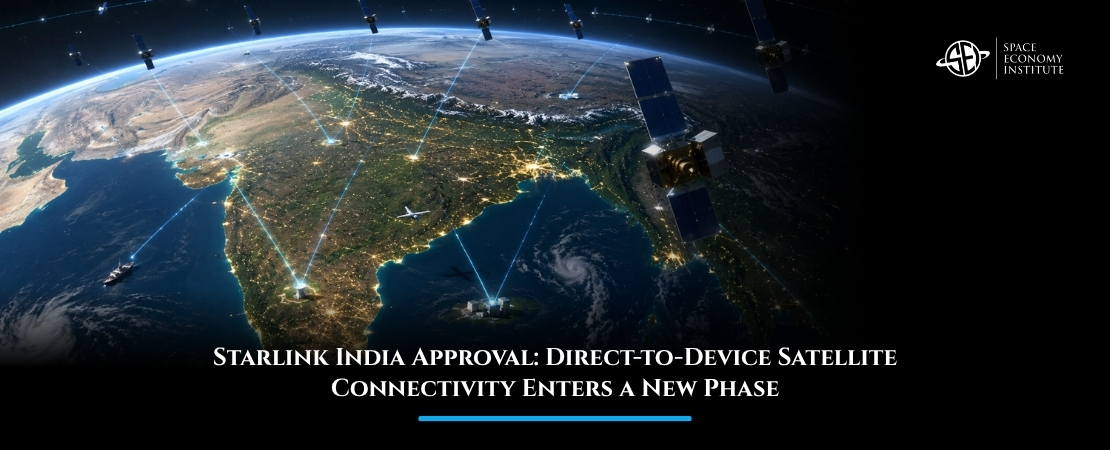
India’s satellite communications market is entering a decisive moment. Starlink has reapplied to India’s space regulator, IN-SPACe, seeking approval to deploy its satellite constellation, including direct-to-device connectivity services. For the space economy, this is more than a licensing update. It signals that the next phase of satellite broadband will be fought across regulation, telecom partnerships, national security, and mobile connectivity.
Why India Matters So Much
India is one of the world’s most important telecom markets. It has hundreds of millions of mobile users, fast-growing digital services, large rural populations, major infrastructure ambitions, and strong national priorities around digital inclusion.
For satellite operators, India is attractive because terrestrial networks do not solve every connectivity problem. Remote villages, mountain regions, islands, disaster zones, maritime routes, border areas, and industrial sites can be expensive or difficult to connect through fiber or towers alone. Satellite broadband can fill those gaps.
But India is not simply an open field for foreign operators. It is a highly strategic market where connectivity is tied to data sovereignty, security, spectrum policy, domestic industry development, and geopolitical autonomy. That makes regulatory approval just as important as satellite technology.
From Broadband to Direct-to-Device
The most important part of Starlink’s new application is the reported inclusion of direct-to-device, or D2D, connectivity.
Traditional satellite broadband usually requires user terminals or dedicated equipment. Direct-to-device services aim to connect ordinary smartphones directly to satellites. This could expand the market dramatically, because it turns space infrastructure into an extension of mobile networks.
The potential use cases are powerful: emergency messaging, rural coverage, disaster response, maritime connectivity, border communications, Internet of Things services, and eventually data services for users outside terrestrial coverage.
This is why D2D is economically disruptive. It moves satellite operators closer to the core telecom market. Instead of serving only homes, ships, aircraft, or enterprises with specialized equipment, satellite networks could become a backup or extension layer for everyday mobile connectivity.
That also explains why regulators and telecom operators are watching closely. Direct-to-device services raise questions about spectrum coordination, competition with mobile network operators, lawful interception, data routing, emergency access, pricing, and national security.
A Crowded Indian Satellite Internet Race
Starlink is not alone. India’s satellite communications race already includes players such as Eutelsat OneWeb, Jio Satellite Communications, and other applicants seeking authorization for satellite services.
The competitive dynamics are complex. Starlink brings scale, a large operational constellation, launch integration through SpaceX, and experience serving global broadband customers. OneWeb brings institutional and enterprise connectivity experience, with strong links to India through Bharti. Jio has unmatched domestic telecom distribution and could combine terrestrial mobile scale with satellite connectivity. Amazon Leo and other players are also part of the global context.
This means India may become one of the clearest tests of how satellite and terrestrial telecom models converge. The winners may not be the companies with the most satellites alone, but those able to combine regulatory approval, local partnerships, affordable devices, spectrum access, ground infrastructure, and trusted security architecture.
Regulation as Market Architecture
India’s approach to satellite communications will shape the market before services even go live. Licensing, spectrum assignment, gateway requirements, security clearances, and data-localization rules will determine how quickly operators can deploy and what kinds of services they can offer.
This is not bureaucracy for its own sake. Satellite communications touch sensitive national infrastructure. Signals cross borders. Data can move through international networks. Coverage can extend into border regions and maritime zones. For governments, satellite connectivity is both an economic enabler and a security domain.
For companies, this creates a clear lesson: success in the space economy depends on policy literacy. Technical capability is necessary, but not sufficient. Operators must understand telecom law, security requirements, spectrum management, public procurement, and local market conditions.
What Comes Next
Starlink’s renewed India application affects satellite operators, mobile network operators, rural users, emergency services, regulators, investors, and companies building direct-to-device technologies. If approved, it could accelerate India’s transition from satellite broadband as a niche service to satellite connectivity as a mainstream layer of telecom infrastructure.
If this topic is of interest, you can learn more about satellite communications, direct-to-device connectivity, telecom-space convergence, regulation, and commercial space strategy in the Master in Space Economy by the Space Economy Institute. Discover more about the Master and explore how satellite networks are reshaping the future of global connectivity.