
AST SpaceMobile BlueBird Satellites: Direct-to-Device Broadband Moves Toward Commercial Service
- August 12, 2026
- Posted by: admin
- Category: Innovation
Space-Based Cellular Is Becoming Real Infrastructure
The race to connect ordinary smartphones directly to satellites has entered a new phase. On August 5, 2026, AST SpaceMobile successfully launched BlueBird satellites 11, 12 and 13 from Cape Canaveral aboard a SpaceX Falcon 9. Then, on August 10, the company confirmed that its constellation has grown to 13 spacecraft in orbit and that it is preparing beta services with strategic partners. For the space economy, this is a major step toward turning direct-to-device connectivity into commercial infrastructure.
What Direct-to-Device Connectivity Means
Direct-to-device satellite connectivity allows standard, unmodified smartphones to communicate with satellites without a special terminal, satellite dish or dedicated handset. This is different from traditional satellite broadband, where users usually need specific equipment.
The economic implications are significant. If satellite networks can connect directly to everyday phones, the addressable market expands dramatically. Remote communities, ships, aircraft, energy sites, mining operations, disaster zones, emergency responders and rural users could gain access to voice, data and video services where terrestrial towers are unavailable, damaged or uneconomic.
AST SpaceMobile is positioning itself as a partner to mobile network operators, rather than a replacement for them. That matters because telecom companies already control spectrum rights, customer relationships, billing systems and regulatory channels. A satellite layer can extend their networks instead of forcing them to build towers everywhere.
Why the BlueBird Launch Matters
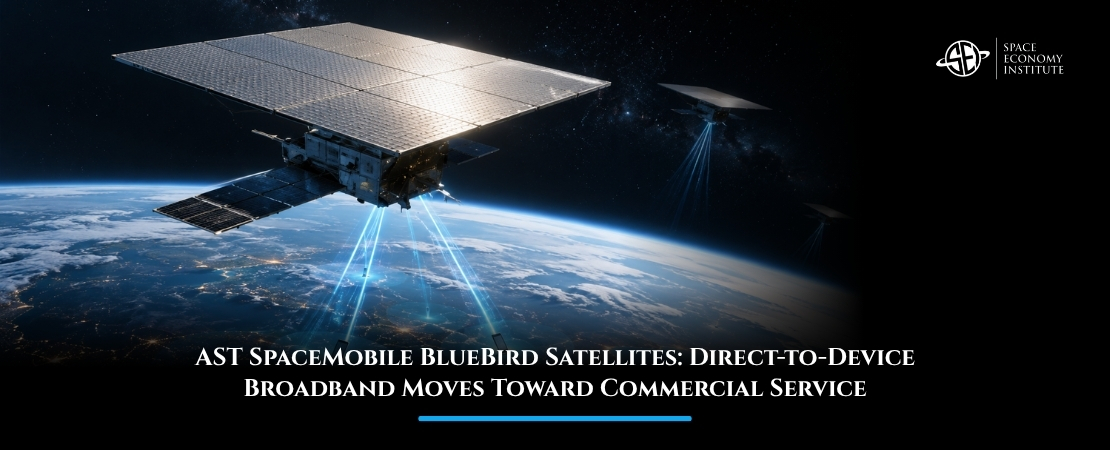
The latest launch is important because it was not just another satellite deployment. BlueBird 11, 12 and 13 are part of AST SpaceMobile’s next-generation architecture and are described by the company as the largest commercial communications arrays deployed in low Earth orbit.
Large phased-array antennas are essential because smartphones have small antennas and limited power. To reach ordinary devices from orbit, the satellite must do much of the technical work: generating powerful, precise beams, managing interference and supporting enough capacity for useful broadband service.
AST SpaceMobile says these next-generation satellites are expected to support peak data rates approaching 200 Mbps, nearly double the 98.9 Mbps demonstrated by its initial Block 1 BlueBird satellites. That difference matters. Direct-to-device connectivity is moving beyond emergency text messaging toward broadband use cases, including data, voice and video.
Manufacturing Scale Becomes the Real Test
The commercial question is no longer only whether the technology can work. It is whether it can scale.
AST SpaceMobile’s August 10 update said BlueBird satellites 17 through 46 are already in various stages of production and assembly, while BlueBirds 14, 15 and 16 are being prepared for the next mission. The company also reported more than 500,000 square feet of manufacturing and operations facilities and a workforce of more than 2,250 people.
This shows how the space economy is becoming industrial. Direct-to-device networks require satellite production, launch cadence, gateways, spectrum coordination, mobile network integration, testing, software, ground infrastructure and regulatory approval across multiple markets.
The company also reported nearly 50 gateways in various stages of completion, installation and planning. These gateways are critical because satellites still need to connect traffic into terrestrial networks. Space-based cellular is not “space only”; it is a hybrid telecom infrastructure model.
The Business Model: Telecom, Government and Emergency Response
AST SpaceMobile says it has signed partnerships with more than 60 mobile network operators, collectively covering over 3 billion subscribers. Its partners include major telecom and technology names such as AT&T, Verizon, Vodafone, Rakuten, Google, Bell, Telus, stc Group and American Tower.
Government demand is also becoming important. The company reported more than $125 million in aggregate U.S. government awards supporting national-security applications and a revenue backlog of approximately $1.30 billion across commercial partners and government contract awards.
This makes direct-to-device connectivity more than a consumer telecom story. It is also relevant for disaster response, emergency communications, national security, Internet of Things, AI edge compute and resilient infrastructure.
What Comes Next
AST SpaceMobile’s latest launch shows that direct-to-device satellite broadband is moving from prototype to deployment. The next milestones will be beta service, regulatory approvals, satellite manufacturing cadence, launch access and real-world performance with mobile operators.
Telecom companies, governments, emergency services, investors, rural communities and underserved users are all affected. If the model succeeds, mobile coverage will no longer stop where towers end.
If this topic is of interest, you can learn more about satellite communications, direct-to-device networks, telecom-space convergence and commercial space infrastructure in the Master in Space Economy by the Space Economy Institute. Discover more about the Master and explore how satellite connectivity is reshaping the future of global communications.